
Why Is the Brick Cracking Above My Window or Garage Door in Alexandria?
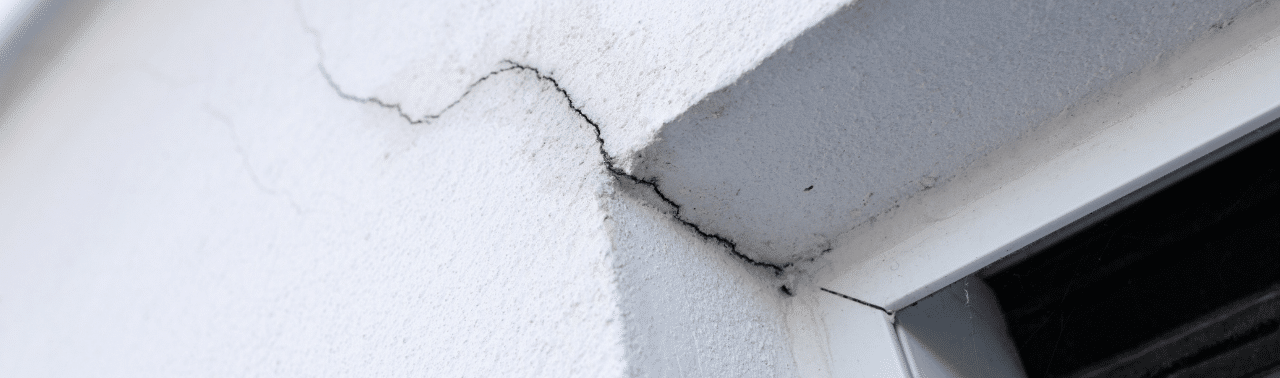
Brick often cracks above windows and garage doors because those openings interrupt the wall and concentrate stress around the support carrying the masonry above them. In many newer brick walls, that support is a steel lintel. In older Alexandria masonry, the opening may also include a brick jack arch or another historic opening detail.
The crack pattern gives us useful clues. A horizontal crack immediately above an opening can point toward corrosion or movement at a steel lintel. Cracks that start at the corners and follow mortar joints away from the opening can point toward settlement or another movement in the structure.
That does not mean every crack above a window is structural. Small, stable mortar cracks can sometimes be monitored. The important part is figuring out whether the problem is in the masonry itself, the lintel carrying it, or the structure below the opening before choosing the repair.
Read the Crack Before You Decide What Needs Repair
Brick is rigid, so movement around a window or garage door usually becomes visible at the weakest joints around the opening. The location and direction of the crack often tell us more than the fact that a crack exists.
A lintel is the structural member that carries the weight above an opening. In many brick veneer homes, it is an L-shaped steel angle installed over the window or door. Older masonry can be different, including openings formed with brick jack arches and other traditional masonry details.
The National Park Service identifies failed or deflecting lintels, foundation settlement, moisture and thermal movement, corrosion of steel, and freeze-thaw exposure among the conditions that can cause masonry cracking. It specifically notes that cracking around openings can result from lintels or arches that deflect, deteriorate, or fail.
Here is how we would start reading the pattern:
| Crack or Condition | What It May Point Toward | What to Check Next |
|---|---|---|
| Horizontal crack directly above the opening, especially with rust staining or lifted brick | Corrosion and expansion of a steel lintel | Condition of the steel, displacement of the masonry, water entry |
| Diagonal or stepped cracks from the upper corners with a visible dip over the opening | Lintel deflection or movement across the span | Whether the brick line is sagging and whether the condition is changing |
| Stair-step crack extending from the opening toward a corner of the house | Possible foundation or structural movement | Foundation cracks, other settlement symptoms, whether movement continues around the corner |
| Small scattered hairline cracks in mortar with no displacement | Minor or stable masonry movement may be possible | Photograph and monitor for change |
| Spalling brick, deteriorated mortar, damp staining or open joints | Moisture deterioration and possible freeze-thaw damage | Water source, flashing, drainage and condition of the masonry |
These patterns are starting points, not automatic diagnoses. More than one condition can exist at the same time. A rusting lintel may also have a water problem above it, while settlement can concentrate cracking around an opening even when the lintel itself is still in good condition.
If the crack extends beyond the opening and begins to resemble a broader stair-step pattern, we also compare it against cracks in the foundation walls and other evidence of settlement rather than assuming the lintel caused it.
Horizontal Cracks Often Put the Steel Lintel High on the List
Steel lintels sit directly beneath the brick above many window and door openings. When exposed steel corrodes, the corrosion products occupy more space than the original metal. That expansion can push upward or outward against the surrounding brick and mortar.
DESKA’s current structural steel lintel guidance identifies this exact mechanism. As the steel corrodes and expands, the masonry around the lintel can begin cracking and separating.
That is why a long horizontal crack immediately above a window can look different from settlement cracking. You may also see rust staining, a mortar joint opening directly along the lintel, or individual bricks being pushed slightly out of position.
Simply repointing that joint may improve how it looks, but it does not stop steel from continuing to corrode underneath. If the lintel itself is the cause, the condition of the steel has to be part of the repair decision.
Moisture matters here too. Modern brick veneer details commonly include flashing and weeps above the lintel so water that gets behind the brick can drain back out. The International Masonry Institute shows steel lintels, through-wall flashing and weep vents working together at window heads rather than treating the masonry as a completely watertight surface.
That means we do not want to blindly seal every opening in the mortar around a window. A masonry wall needs its intended drainage paths to continue working.
Why Garage Door Openings Deserve a Closer Look
Garage doors create much wider openings than most windows, which means the material above them has to span a longer distance without support from the wall below.
When that support begins to deflect, the brick line over the opening may develop a visible dip. Cracks often begin near the upper corners of the garage door, where stress is transferred back into the wall.
A sagging appearance does not tell us by itself whether the condition is actively getting worse. Some older movement may have stabilized. What matters is whether the crack is changing, whether the brick line continues to move, and whether other parts of the opening are beginning to shift with it.
If you are watching a garage-door crack, photographs are useful. Take the picture straight on rather than from an angle, include the full opening, and keep a dated record. Look for changes in the dip across the span, cracks extending farther from the corners, new mortar separation, or gaps appearing around the door trim.
Wide openings are also one place where patching the visible crack without checking the support underneath it can be misleading. The mortar is often showing us movement that originated somewhere else.
Older Alexandria Brick Is Not the Same as a Newer Brick Veneer Wall
This distinction matters more in Alexandria than it would in many newer communities.
The Office of Historic Alexandria notes that brick from three centuries of construction can be seen around Old Town. Early buildings were constructed with different brick, mortar, wall assemblies and masonry techniques than the veneer systems commonly used in later homes.
One local example is the City’s restoration of Freedom House at 1315 Duke Street. The project involved reconstructing historic window openings and installing hand-cut brick jack arches above the windows to recreate the building’s earlier appearance. The restored arches were installed with new steel angle support, which is a useful reminder that the visible brick shape and the structural support behind it are not always the same thing.
That matters when looking at a crack. A newer veneer wall may have a relatively straightforward steel angle supporting the brick over the opening. An older wall may have multi-wythe masonry, historic mortar, a jack arch, earlier alterations, replacement steel, or several generations of repair in the same area.
DESKA’s existing guidance for foundation repair on historic Alexandria homes makes the same broader point. Older properties often need to be evaluated based on how the existing masonry, framing, foundation, water management and previous alterations interact rather than assuming they behave like modern construction.
Repairs to historic masonry also need to respect the original materials. The City of Alexandria’s masonry guidance says repointing in regulated historic areas should match historic mortar in characteristics such as composition, appearance and joint profile. The City also has review requirements for certain work within its regulated historic districts. Those are City of Alexandria requirements, not rules for all of Fairfax County or Northern Virginia, so owners should confirm the requirements for their specific property before exterior work begins.
A Crack Above a Window Can Also Become a Water Problem
Even when a lintel crack is not part of a larger foundation problem, an open joint over a window can create another issue.
The head of the window is one of the places where the wall has to manage water that gets behind the exterior brick. Proper flashing and weep locations are designed to collect that moisture and direct it back to the exterior.
When masonry shifts around a corroding or deflecting lintel, joints can open and the original flashing details can be disturbed. That may allow water to show up at the top of the window, even though homeowners often expect window leaks to start at the sill.
Repeated wetting can also accelerate deterioration of mortar and masonry. In colder weather, water absorbed into brick or mortar can contribute to freeze-thaw damage, especially where the masonry is already cracked or spalling. The National Park Service includes moisture changes and freeze-thaw action among recognized contributors to brick deterioration and cracking.
Water is therefore a practical reason to investigate a recurring lintel crack even when the wall does not appear to be in immediate structural distress. A small opening that repeatedly admits water can turn into a larger masonry problem over time.
The Correct Repair Depends on What Is Moving
This is where homeowners can spend money on the wrong repair.
If you have a few stable hairline mortar cracks with no displacement, monitoring may be reasonable. Dated photographs can help show whether the crack is actually changing instead of relying on memory.
If the masonry itself is deteriorated but the lintel and surrounding structure are stable, masonry repair or repointing may be the appropriate scope. That is different from a rusting steel lintel that is actively lifting the brick.
When the lintel is corroded or deflecting, filling the crack alone does not address the support underneath it. DESKA currently provides structural steel lintel evaluation and repair services, so the condition of the lintel can be evaluated as part of the structural problem rather than treating the mortar joint as the entire issue.
Foundation movement changes the decision again. A stair-step crack that begins near a window and continues through the wall toward a corner may be using the opening as a stress point rather than originating at the lintel. In that situation, replacing the lintel would not correct movement coming from below.
DESKA’s Alexandria crack guidance already separates stair-step masonry cracking from isolated cosmetic cracking and treats it as one possible sign of foundation settlement. The full list of other signs of foundation settlement belongs in DESKA’s existing settlement content, but the important cross-check here is whether the crack around the opening is part of a larger movement pattern.
If the opening is moving with the foundation, the foundation question comes first. Repairing only the brick above the window can leave the source of movement untouched.
What affects the cost?
There is not one useful price for repairing cracked brick above a window because the visible crack does not tell us the repair scope.
Cost can change based on:
- the width and type of opening
- whether the support is steel or part of a historic masonry opening
- how much brick has to be removed and rebuilt
- whether matching historic brick or mortar is required
- access to the opening
- the condition of flashing and adjacent masonry
- whether foundation or structural movement also has to be addressed
Until we know why the brick is cracking, a generic price for “brick crack repair” can be misleading. A mortar repair and a structural lintel correction are not the same project.
Should You Watch It, Call a Mason,
or Request a Structural Evaluation?
The best next step depends on what the crack is doing.
| What You See | Reasonable Next Step |
|---|---|
| Small scattered mortar cracks that appear stable and show no displacement | Photograph and monitor |
| Eroded mortar or isolated masonry deterioration with no evidence of lintel or structural movement | Masonry evaluation may be appropriate |
| Horizontal opening directly above the window with rust staining or lifted brick | Evaluate the lintel |
| Brick line visibly dipping over a garage door | Structural evaluation of the opening |
| Crack growing over time | Evaluate the condition rather than repeatedly patching it |
| Stair-step cracking extending away from the opening | Check whether foundation movement is involved |
| Older or historic opening that has been altered previously | Evaluate the existing construction before deciding on a repair |
| Several symptoms suggesting different causes | Structural evaluation can help determine what is actually moving |
DESKA provides structural evaluations in Alexandria with licensed professional engineers on staff. Their current evaluation process is intended to determine what component is damaged or moving, whether the condition appears active, and what additional repair or investigation is appropriate.
If you are trying to document the crack before scheduling an evaluation, take a clear photo of the entire opening and a closer photo of the crack. Repeat the photos from approximately the same location over time, and include something that provides scale. Also note whether the crack is over a window or garage door, whether the brick line appears to dip or lift, and whether you have seen any change since you first noticed it.
For homeowners in Alexandria, Mount Vernon, Fairfax County and surrounding Northern Virginia communities, the goal should be to determine what is carrying the brick and what is actually moving before choosing the repair. A cracked mortar joint, a corroded lintel and foundation settlement can produce symptoms in the same part of the wall, but they do not call for the same solution.
If the brick above your window or garage door is cracking, sagging or changing, DESKA can evaluate the opening and determine whether the problem points to the lintel, the surrounding structure, the foundation, or a condition that belongs primarily to a masonry specialist.