Historic Home Foundation Repair in Alexandria, VA: What Homeowners Should Know

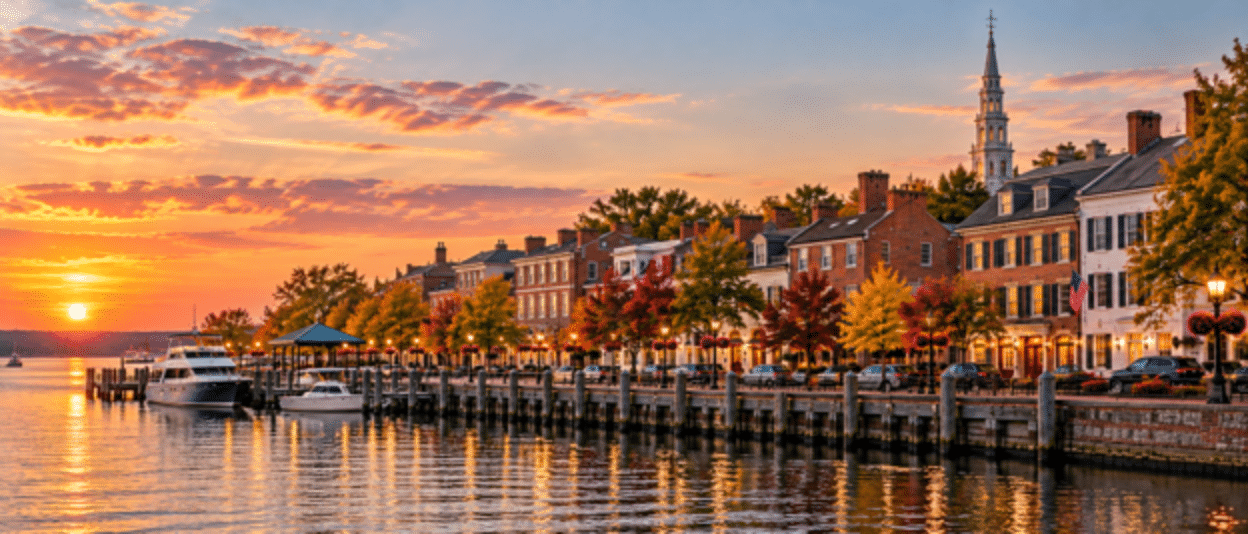
Alexandria, Virginia is known for its historic homes, brick townhouses, and distinctive architecture. From the centuries-old properties of Old Town to homes throughout Alexandria's established neighborhoods, these buildings are part of what makes the city so unique.
But owning an older home also means caring for a structure that may have been standing for generations.
Historic homes were often built with materials and construction methods that differ significantly from those used today. Brick and masonry foundations, aging mortar, additions constructed at different times, changing drainage patterns, and decades of soil movement can all affect how an older home performs.
That doesn't mean every crack or uneven floor is a major structural problem. It does mean that foundation problems in older Alexandria homes deserve a careful evaluation before repairs are recommended.
At DESKA Foundation Repair & Basement Waterproofing, our team combines structural engineering capabilities with hands-on foundation repair, waterproofing, drainage, and structural repair experience. That allows us to look beyond the visible symptoms and determine what may actually be happening with the home.
Why Alexandria's Historic Homes Require a Different Approach
Alexandria has one of the country’s richest collections of historic architecture. The City’s Old & Historic District was established in 1946 and is one of the nation’s earliest historic districts. Alexandria also has several other historic districts and designated 100-year-old buildings.
Many older Alexandria properties were constructed using brick, stone, and traditional masonry techniques rather than modern poured-concrete foundation systems.
Over decades—or even centuries—a home can experience changes from:
- Soil movement and settlement
- Water collecting around the foundation
- Deteriorating mortar joints
- Repeated wetting and drying of masonry
- Previous foundation repairs
- Additions or renovations that changed how loads are carried
- Changes to surrounding grading and drainage
- Aging beams, joists, columns, and other structural components
In some cases, what appears to be a foundation problem may actually originate somewhere else in the structure. A sloping floor, for example, could involve the foundation, but it could also involve framing, moisture-damaged wood, inadequate supports, or a combination of conditions.
That is why the first step should be determining why the problem is occurring, rather than simply repairing the most visible symptom.
“Older homes have a story, and so do their foundations. Our goal isn’t to walk into an Alexandria home assuming it needs a major repair. We want to understand what’s happening, explain it clearly to the homeowner, and recommend the right solution for that particular house.”
— Brian, DESKA Foundation Repair & Basement Waterproofing
Common Foundation Problems in Older Alexandria Homes
Historic foundations can develop several types of problems over time.

Cracks in Brick or Masonry
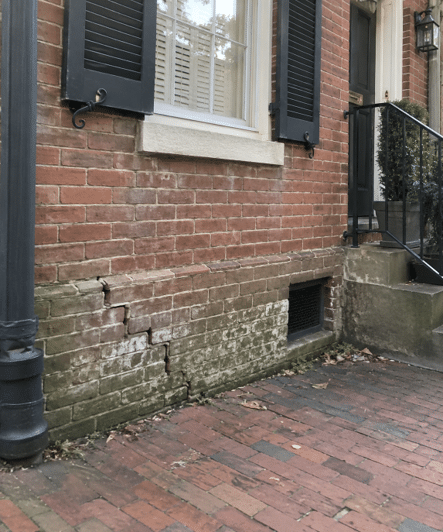
Small cracks aren't automatically evidence of a serious structural problem. However, stair-step cracking through brick or mortar joints, widening cracks, displaced masonry, or cracks that continue to change can indicate movement that should be evaluated.
Pay particular attention when cracking appears alongside other changes in the home, such as sticking doors, uneven floors, separating trim, or movement around windows.
Uneven or Sloping Floors
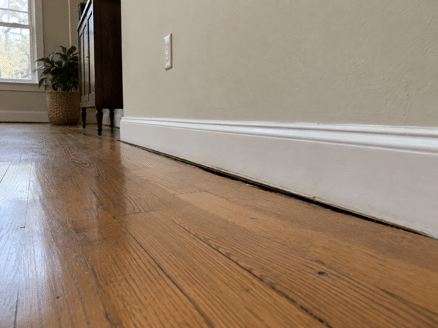
Older homes aren't always perfectly level. Some degree of variation may have developed gradually over many decades.
But floors that noticeably slope, sag, bounce, or appear to be getting worse may warrant a closer look.
The cause could involve foundation settlement, inadequate support beneath the floor system, deteriorated framing, moisture damage, or previous modifications to the structure.
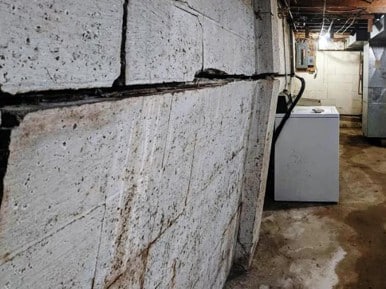
Bowing or Bulging Foundation Walls
Foundation walls can experience pressure from the surrounding soil and water.
Cracking, inward movement, bulging masonry, or noticeable changes in a basement wall should be inspected to determine whether the condition is cosmetic, moisture-related, or structural. If the wall is beginning to bow or move inward, learn more about bowed wall repair and stabilization options.

Deteriorating Brick and Mortar
Water can be particularly damaging to older masonry. Mortar can deteriorate, bricks can begin to flake or break down, and repeated moisture exposure can contribute to deterioration over time. The City of Alexandria maintains specific preservation guidance for historic masonry and reviews certain masonry repairs within its locally regulated historic districts. Homeowners can review the City’s Historic Masonry Preservation and Maintenance Guidelines for information on appropriate repair methods, mortar, repointing, and moisture-related deterioration.
Simply covering deteriorated masonry or applying the wrong repair material may not address the underlying problem.

Is It a Foundation Problem—or a Water Problem?
This is one of the most important distinctions for owners of older Alexandria homes.
A wet basement does not automatically mean the foundation is failing.
Water can enter through cracks, masonry walls, floor-wall joints, window wells, penetrations, or other openings. Poor grading, downspout discharge, groundwater, and drainage problems outside the home can also contribute.
At the same time, structural movement can create new openings that allow water to enter.
That means foundation repair and basement waterproofing sometimes overlap—but they aren’t the same thing.
Foundation repair addresses structural movement or inadequate support.
Waterproofing and drainage solutions address how water is reaching or accumulating around the structure.
Some homes need one. Some need both.
The key is diagnosing the cause before deciding on the solution.
Previous Repairs Can Complicate Older Homes
One thing we frequently consider when evaluating an older property is what has already been done to the house.
A historic home may have been repaired, renovated, expanded, or remodeled several times over its lifetime.
You may find:
- Old patches over foundation cracks
- Different types of mortar
- Added support columns
- Altered floor framing
- Previous underpinning
- Old drainage systems
- Additions built on different foundations
- Waterproofing performed decades earlier
Some previous repairs may still be performing exactly as intended. Others may have addressed a symptom without correcting its underlying cause.
Understanding the history of the structure can therefore be an important part of determining what needs to happen next.
Why Structural Engineering Matters in Historic Foundation Repair
Historic homes aren’t the place for a one-size-fits-all repair.
Before recommending significant structural work, it can be valuable to understand how the foundation, framing, soil conditions, water management, and previous construction changes interact.
DESKA is a licensed professional engineering, specialty structural, and waterproofing contractor. Our capabilities include structural evaluations, structural design, foundation repair, underpinning, waterproofing, drainage, and related repairs.That Design-Repair approach can be particularly useful with older Alexandria homes because the person evaluating a structural condition can consider more than simply which product should be installed.
The goal is to answer:
What is happening? Why is it happening? And what repair—if any—is appropriate for this particular house?
Signs Your Historic Alexandria Home Should Be Evaluated
One small crack doesn’t necessarily mean you need foundation repair. Instead, look for patterns or changes.
You may want to schedule an evaluation if you notice stair-step cracks in masonry, cracks that are growing, significantly sloping or sagging floors, doors and windows that suddenly stick, separation around trim or walls, bowing foundation walls, crumbling masonry, recurring basement water, or previous repairs that appear to be moving again.
Multiple symptoms occurring together are especially worth investigating
Special Considerations for Homes in Old Town Alexandria
If your home is located within Alexandria’s Old & Historic District, Parker-Gray Historic District, or is a designated 100-year-old building, there may also be preservation requirements to consider before certain exterior work is performed.
The City’s Board of Architectural Review regulates qualifying exterior alterations within Alexandria’s locally regulated historic districts. Some masonry repairs can be handled through administrative review, while other work may require additional approval.
That makes planning particularly important.
A foundation repair should not only address the structural concern—it should also consider the characteristics of the existing building and applicable preservation requirements.
Protecting an Old Home Without Losing What Makes It Special
Historic homes have survived for decades or centuries because generations of homeowners have continued maintaining and adapting them.
Foundation repair shouldn’t be about unnecessarily replacing old construction.
It should begin with understanding what can be preserved, what needs to be stabilized, and what is causing the problem in the first place.
Depending on what an evaluation finds, recommendations may involve structural stabilization, underpinning, masonry repair, drainage improvements, waterproofing, framing repairs, or sometimes simply monitoring the condition.
The right solution depends on the house.
Concerned About the Foundation of an Older Alexandria Home?
If you’re seeing foundation cracks, uneven floors, deteriorating masonry, basement water, or other structural changes in an older Alexandria home, DESKA can help determine what’s happening before you decide how to repair it.
Our team provides structural evaluations, foundation repair, structural repair, basement waterproofing, drainage solutions, and related services throughout Alexandria and Northern Virginia.
Schedule an inspection with DESKA Foundation Repair & Basement Waterproofing and get a clearer understanding of what’s happening beneath your home.