Epoxy Crack Injection Services
A crack in a foundation wall is not always just a surface issue. Some cracks are caused by concrete shrinkage, while others point to settlement, soil pressure, water intrusion, or structural movement.
Epoxy crack injection is a repair method used to bond and seal certain concrete cracks from the inside. When the crack is suitable for epoxy, the injected material fills the crack and cures into a strong bond that helps restore structural integrity.
DESKA Services provides epoxy crack injection for homeowners, property managers, contractors, and commercial clients throughout Northern Virginia, Washington, DC, and Maryland. Our team evaluates the crack, identifies what caused it, and determines whether epoxy injection is the right repair or whether a different structural, waterproofing, or drainage solution is needed.
What Is Epoxy Crack Injection?
Epoxy crack injection is a concrete repair method that uses a two-part epoxy resin to fill cracks in poured concrete walls, slabs, and structural elements.
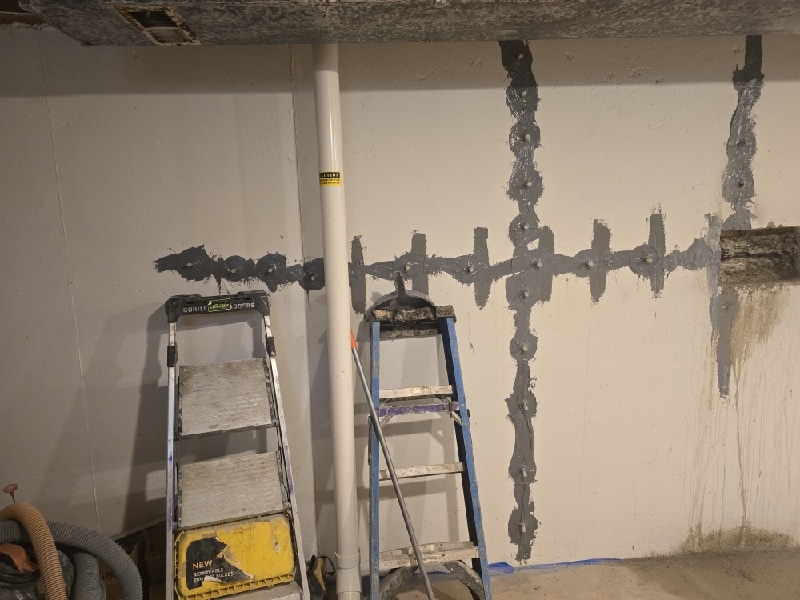
The epoxy is injected into the crack through small ports placed along the damaged area. As the material moves through the crack, it fills the void and bonds the concrete back together. Once cured, the epoxy becomes a rigid, high-strength material.
Epoxy injection is often used for structural cracks where the goal is to restore strength and continuity to the concrete. It is different from polyurethane crack injection, which is typically used when the main concern is active water leakage.
When Epoxy Crack Injection Is Used
Epoxy crack injection may be appropriate for certain cracks in:
Poured concrete foundation walls
Basement walls
Concrete retaining walls
Structural concrete slabs
Garage foundation walls
Commercial concrete walls
Concrete beams or structural components
Cracks caused by shrinkage or limited movement
Cracks that need structural bonding
The crack must be evaluated before repair. Epoxy is rigid after it cures, so it is best used when the concrete is stable and the crack is not actively moving. If the wall is still shifting, bowing, settling, or taking on water pressure, the underlying issue must be addressed first.
Common Signs You May Need Crack Repair
A crack should be looked at by a professional if you notice:
- A crack that runs through a poured concrete foundation wall
- A crack that has widened over time
- Stair-step or diagonal cracking near structural areas
- Cracks near doors, windows, corners, or beam pockets
- Water staining around a crack
- Cracks paired with bowing or inward wall movement
- Cracks that appear after heavy rain or freeze-thaw cycles
- Cracks in a basement wall, garage wall, or retaining wall
- Cracks that were previously patched but opened again
- Foundation cracks discovered during a home inspection
Not every crack requires epoxy injection. Some cracks may need polyurethane injection, carbon fiber reinforcement, wall anchors, drainage correction, underpinning, or a structural repair plan. The right solution depends on why the crack formed.
Epoxy Injection vs. Polyurethane Injection
Epoxy and polyurethane are both used for crack injection, but they solve different problems.
Epoxy Crack Injection
Epoxy is rigid and strong after it cures. It is commonly used when the crack needs to be bonded back together. This makes it a good option for many structural concrete cracks, especially when the concrete is stable.
Polyurethane Crack Injection
Polyurethane is more flexible and expands as it reacts. It is often used to stop active water leaks through foundation cracks. It can handle small amounts of movement better than rigid epoxy, but it is not usually chosen when structural bonding is the main goal.
Which One Is Right?
If the goal is structural repair, epoxy may be the better choice. If the goal is stopping water, polyurethane may be better. If the crack is leaking and structural, the repair may require a more detailed plan.
DESKA evaluates the crack before recommending a material. Guessing wrong can lead to failed repairs, continued leaks, or missed structural problems.

Why Foundation Cracks Happen
Cracks can form in concrete for several reasons. In the DC metro area, many foundation issues are tied to soil, drainage, and seasonal moisture changes.
Concrete Shrinkage
Concrete can shrink as it cures. Some shrinkage cracks are narrow and stable, but they should still be evaluated if they extend through a foundation wall or allow water to enter.
Settlement
If the soil beneath a foundation settles unevenly, the structure can move and crack. Settlement cracks may continue to widen if the underlying support problem is not corrected.
Hydrostatic Pressure
When water builds up in the soil outside a foundation wall, it creates pressure against the wall. This can contribute to cracking, bowing, and leaks.
Expansive Clay Soil
Northern Virginia, DC, and Maryland properties often deal with clay-heavy soils. Clay soil expands when wet and shrinks when dry. That movement can stress foundation walls and slabs over time.
Poor Drainage
Short downspouts, clogged gutters, negative grading, or poorly placed drains can send water toward the foundation. Repeated saturation increases soil pressure and raises the risk of cracking.
Freeze-Thaw Cycles
Water that enters small cracks can freeze and expand. Over time, freeze-thaw cycles can make cracks worse.
How DESKA Handles Epoxy Crack Injection
Every crack repair starts with diagnosis. A crack is a symptom. The important question is what caused it.
- Crack Inspection
DESKA reviews the crack location, width, direction, depth, and surrounding conditions. We also look for signs of water intrusion, wall movement, settlement, bowing, and drainage issues. - Repair Recommendation
If the crack is stable and suitable for epoxy, we recommend epoxy injection. If another repair is more appropriate, we explain why. - Surface Preparation
The crack surface is cleaned and prepared so the injection material can be controlled properly. Ports are placed along the crack to allow epoxy to enter the full depth of the opening. - Crack Sealing
The exposed face of the crack is sealed before injection. This helps contain the epoxy and allows the material to move through the crack instead of escaping at the surface. - Epoxy Injection
A two-part epoxy is injected through the ports. The material fills the crack and bonds to the concrete. Injection continues until the crack is filled along the intended repair area. - Curing and Finish Work
After the epoxy cures, the ports are removed or finished as needed. The repaired area may be cleaned, patched, or prepared for additional work depending on the project.
What Epoxy Crack Injection Can Help With
Epoxy injection can help:
- Bond stable concrete cracks
- Restore continuity in cracked concrete
- Improve structural integrity where appropriate
- Seal non-moving cracks from the interior
- Reduce the risk of further crack separation
- Repair certain foundation wall cracks without excavation
- Support structural repair plans for residential and commercial properties
Epoxy injection is not a cure for active soil movement, ongoing settlement, poor drainage, or bowed walls. If those issues are present, DESKA may recommend additional repairs.
When Epoxy Injection May Not Be Enough
Epoxy crack injection is a strong repair method, but it has limits. It may not be the right standalone solution if:
- The wall is actively bowing
- The foundation is still settling
- The crack is widening
- Water pressure is active behind the wall
- The crack is leaking heavily
- The concrete is crumbling or badly deteriorated
- The crack is caused by structural overload
- Drainage problems are still pushing water toward the foundation
In these cases, the crack may need to be part of a larger repair plan. That could include drainage correction, waterproofing, carbon fiber reinforcement, wall anchors, underpinning, concrete repair, or a structural evaluation.
Residential Epoxy Crack Injection
Homeowners often discover foundation cracks while finishing a basement, cleaning a garage, preparing to sell a home, or responding to water stains after heavy rain.
DESKA helps homeowners understand whether a crack is cosmetic, structural, water-related, or a sign of movement. If epoxy injection is the right repair, we can complete the work with limited disruption compared to many exterior or replacement methods.
Common residential applications include:
- Basement foundation wall cracks
- Garage foundation wall cracks
- Cracks found during home inspections
- Stable poured concrete wall cracks
- Cracks near windows, corners, or openings
- Structural cracks that need bonding
- Foundation cracks related to minor movement
Commercial Epoxy Crack Injection
Commercial concrete cracks can create safety, maintenance, and long-term structural concerns. DESKA works with property managers, facility managers, contractors, and commercial owners to evaluate cracks and recommend practical repair options.
Commercial epoxy crack injection may be used for:
- Concrete foundation walls
- Parking garage areas
- Mechanical rooms
- Utility areas
- Retaining walls
- Structural concrete walls
- Slab and wall repairs
- Cracks identified during inspections or renovation work
DESKA’s structural and waterproofing experience allows us to coordinate crack repair with broader building needs when necessary.
Why Choose DESKA Services?
A crack can look simple from the inside of a basement. The cause may be outside the wall, below the footing, under the slab, or in the drainage system.
DESKA brings foundation repair, structural repair, waterproofing, drainage, and concrete repair experience together. That matters because epoxy injection should not be treated as a one-size repair.
With DESKA, you get:
- Engineering-informed crack evaluation
- Experience with structural foundation repair
- Waterproofing and drainage knowledge
- Concrete repair and stabilization options
- Local understanding of Northern Virginia, DC, and Maryland soil conditions
- Practical recommendations based on the actual cause
- Residential and commercial repair capabilities
If epoxy injection is the right repair, we will explain the process clearly. If another solution is needed, we will explain that too.
Schedule an Epoxy Crack Injection Evaluation
If you have a crack in a basement wall, foundation wall, garage wall, retaining wall, or other concrete structure, DESKA Services can help determine what caused it and how it should be repaired.
We provide epoxy crack injection and related foundation, waterproofing, structural, drainage, and concrete repair services throughout Northern Virginia, Washington, DC, and Maryland.
Contact DESKA Services to schedule an evaluation and get a clear repair recommendation.
Frequently Asked Questions About Epoxy Crack Injection
What is epoxy crack injection used for?
Epoxy crack injection is used to bond and repair certain cracks in poured concrete. It is often chosen when the crack is stable and the goal is structural bonding.
Does epoxy crack injection stop water leaks?
Sometimes, but epoxy is usually selected for structural bonding. If the main issue is an active water leak, polyurethane injection may be a better option because it expands and remains more flexible.
Is epoxy injection a structural repair?
It can be. Epoxy cures into a rigid, high-strength material that can bond stable concrete cracks. The crack must be evaluated first to confirm that epoxy is the right structural repair method.
Can epoxy be used on a moving crack?
Epoxy is rigid after it cures, so it is not usually the best choice for cracks that are still moving. Active movement may require structural stabilization before crack injection.
Do foundation cracks always need epoxy injection?
No. Some cracks need polyurethane injection, drainage correction, waterproofing, carbon fiber reinforcement, wall anchors, underpinning, or monitoring. The repair depends on the cause and condition of the crack.
Can epoxy injection be done from inside the basement?
In many cases, yes. Epoxy injection is often completed from the interior side of the wall, which can avoid exterior excavation when the crack is accessible and suitable for injection.
How do I know if my crack is serious?
Cracks that widen, leak, run diagonally, appear with bowing walls, or show up near doors, windows, corners, or structural supports should be inspected. A professional evaluation can determine whether the crack is cosmetic, water-related, or structural.
Where does DESKA provide epoxy crack injection?
DESKA provides epoxy crack injection and related concrete, foundation, waterproofing, and structural repair services throughout Northern Virginia, Washington, DC, and Maryland.
Customer Reviews
Engineering Services
I had a very good experience with this company. We had an engineer come out and he was very knowledgeable and wrote a report and made some repair recommendations. We used them to do the work and I was very pleased with the completed project!
Waterproofing
We’ve used DESKA several times and the past and they’ve always been great!
I could not be happier
I could not be happier with the work DESKA performed.
Once I became aware of a moisture problem in my basement, I reached out to several waterproofing companies, including DESKA. Pat Donnelly was my point of contact during the estimate phase of the job and he was professional, transparent, trustworthy, and straightforward. He provided a thorough and fair proposal that we accepted.
The job was performed by Mohamed and his crew. Mohamed did an excellent job of updating me on a daily basis about the job progress. He and his team were on time, organized, and very clean. They coordinated with other people as needed, such as the electrician and inspector. I completely trusted them to get the job done well.
Everyone at DESKA did a great job of coordinating the details and performing the work exactly as described. I would highly recommend them to anyone in need of waterproofing or foundation services. Based on their good work, I don’t think I’ll need them again!