
Why Do Some Alexandria Homes Have Sloping Floors Even When the Foundation Is Stable?
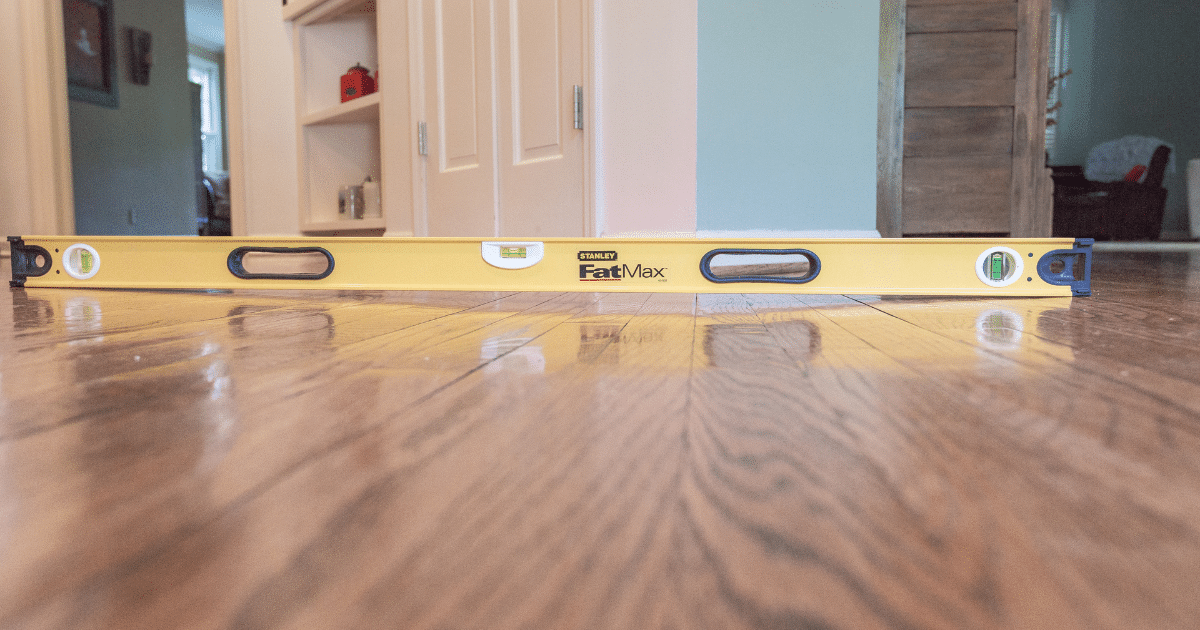
A sloping floor in an older Alexandria home does not automatically mean the foundation is failing. In some homes, the foundation is relatively stable and the unevenness is coming from the floor framing above it, an old addition, moisture-damaged wood, previous renovations, or movement that happened decades ago and has not continued.
That distinction matters because the repair should follow the cause. If the foundation is stable but a beam is sagging through the middle of the house, installing foundation piers would not correct the actual problem. When we evaluate sloping floors, we want to understand whether the low area begins at the foundation, within the framing system, or from a combination of conditions.
That question comes up often in Alexandria because the city has a large stock of older homes with very different construction histories. Old Town alone contains hundreds of early buildings, and many have been repaired, expanded, remodeled, or adapted several times over their lives.
Older Alexandria Homes Were Not Built Like New Houses
One of the first things we consider is the age and construction of the house. Alexandria’s historic housing stock includes brick townhouses, masonry buildings, stone foundations, wood framing, and homes that were built long before modern construction standards became common. The City of Alexandria’s preservation guidance notes that 18th-century foundations in the Old & Historic District were commonly built with locally sourced stone, while precast concrete did not become a building material there until the early 20th century.
That does not mean older construction is defective. It means we have to evaluate it in context. A floor that has developed a slight slope over 100 years may be performing very differently from a floor that dropped noticeably over the last two years.
We also pay attention to how the home has changed. An addition may have been built on a different foundation. A wall may have been removed during a renovation. New openings may have been cut through framing, or support posts may have been added or moved. Those changes can affect the floor system even when the perimeter foundation remains stable.
The Shape of the Slope Gives Us Our First Clue
The way the floor moves across a room can help us decide where to look next.
If the floor gradually slopes toward one exterior corner and that same area has stair-step masonry cracks, sticking windows, or other signs of movement, foundation settlement becomes more likely. If the perimeter appears relatively consistent but the floor dips through the middle of the house, we start looking more closely at beams, joists, and interior supports.
A localized low spot can also point toward a framing problem. A damaged joist, sagging beam, deteriorated support post, or an old opening that changed the load path may affect one portion of the floor without causing the whole foundation to move.
We do not diagnose the problem from the floor shape alone. It gives us a direction, but we still need the rest of the structure to tell the same story.
A Stable Foundation Can Still Have Sagging Framing Above It
The floor system carries loads from the rooms above and transfers them through joists, beams, posts, and eventually into the foundation or footings below. If one of those components loses strength or is no longer properly supported, the floor can slope or sag even though the foundation walls themselves are stable.
In older Alexandria homes, we may find beams that have deflected gradually over time, joists that were cut or notched during previous work, supports that were added without adequate footing, or framing that has been altered to accommodate plumbing, ductwork, stairs, or renovations. Moisture can also weaken wood framing if a crawl space, basement, or plumbing problem has kept an area damp for a long period.
This is where the distinction between foundation repair and structural framing repair becomes important. The visible symptom may be an uneven floor, but the repair could involve a beam, joist, post, or support line rather than the foundation itself.
Old Settlement Can Leave a Floor Uneven Without Still Being Active
Another possibility is that the house moved in the past and then stabilized.
Older homes are rarely perfect records of their original construction. Foundations settle, additions move differently, repairs are made, framing dries and changes shape, and loads shift as the building is modified. A floor may still reflect that history long after the movement stopped.
That is why we want to know whether anything is changing now. A slope that has looked the same for 20 years is different from one that has become noticeably steeper over the last year. We ask about cracks that have reopened, doors that recently started sticking, trim that is separating, and other changes that can help us distinguish an old condition from active movement.
Previous repairs can be useful clues too. Old patches, added posts, sistered joists, underpinning, or altered framing may tell us where someone else saw a problem in the past. In a historic house, that repair history can be just as important as what we see today.
Additions Can Make an Older Home Feel Uneven
Additions deserve their own look because they often behave differently from the original house.
A rear addition may have been built decades later with different footings, different framing, or on soil that was disturbed during construction. Even if both portions of the home are currently stable, they may have settled to slightly different elevations over time.
That can create a noticeable transition where the old and new sections meet. Homeowners may feel a slope through a doorway, see cracking at the connection, or notice that one section of flooring does not line up perfectly with another.
The important question is whether the difference represents ongoing movement or simply the long-term relationship between two structures built at different times. We do not want to recommend foundation work just because two sections of an older home are not perfectly level.
Floor Elevations Help Us See the Pattern More Clearly
Visual inspection tells us a lot, but floor elevation measurements can help us map the shape of the movement across the house.
If measurements show the floor getting progressively lower toward an exterior foundation wall and we find matching cracks or other symptoms in that area, the foundation may be involved. If the low point follows an interior beam while the foundation perimeter stays comparatively consistent, framing becomes a stronger possibility.
The measurements are not a diagnosis by themselves. We compare them with foundation cracks, exterior masonry, supports, framing, moisture conditions, previous repairs, and the homeowner’s description of when the problem started.
That combination matters more than any single low measurement.
What We Look for When an
Alexandria Home Has Sloping Floors
When we evaluate an uneven floor, we are trying to understand the load path from the floor surface all the way down to the soil.
| What We Check | What It Can Tell Us |
|---|---|
| Floor elevation pattern | Whether movement is concentrated at the perimeter or inside the structure |
| Foundation walls and cracks | Whether the foundation shows signs of settlement or movement |
| Beams and joists | Whether framing is sagging, damaged, or altered |
| Posts and columns | Whether interior supports are stable and properly located |
| Moisture conditions | Whether water has affected wood framing |
| Additions | Whether different sections of the house are moving independently |
| Previous repairs | What problems may have been addressed before |
| Doors, windows, and trim | Whether other parts of the house show recent movement |
| Exterior masonry | Whether cracking lines up with the floor slope |
We are looking for a pattern. If several pieces of evidence point toward the foundation, that leads us in one direction. If the foundation appears stable and the floor problem follows an interior support line, we may focus on the framing instead.
When Does a Sloping Floor Need Repair?
Not every uneven floor in an older Alexandria home needs to be leveled.
A modest slope that has been stable for decades and is not affecting the structure may simply be part of the house. Trying to make every old floor perfectly level can create unnecessary work and may disturb finishes, framing, or other parts of the building that have adapted to their current position.
We become more concerned when the floor is changing, sagging noticeably, bouncing, separating from walls, or showing up alongside other symptoms such as new cracks, sticking doors, damaged supports, or foundation movement. At that point, the goal is to identify what is moving and why before deciding how much correction makes sense.
Even when repair is needed, stabilization and perfect leveling are not always the same goal. In some older homes, restoring adequate support is more important than forcing a century-old floor back to a perfectly level position.
Why a Structural Evaluation Matters in an Older Alexandria Home
This is where an engineering-based evaluation can be especially helpful.
A sloping floor can look like a foundation problem from upstairs even when the cause is a beam or support below. The reverse is also true. Foundation settlement can move the framing above it, so finding a sagging joist does not automatically mean the foundation played no role.
At DESKA, we look at the foundation and framing as one structural system. Our goal is to determine where the movement starts, how loads are being carried, and whether the condition appears active before we recommend a repair.
That is particularly important in older Alexandria homes, where additions, historic materials, previous renovations, and decades of repairs can make the structure more complicated than it first appears. DESKA’s recent historic-home guidance makes the same point: sloping floors can involve foundation settlement, framing, moisture-damaged wood, inadequate supports, or a combination of those conditions.
Should You Be Worried About a Sloping Floor?
A sloping floor is worth investigating when it is new, getting worse, or appearing alongside other structural changes. It is less useful to assume that every uneven floor means foundation failure simply because the house is old.
If you own an older home in Alexandria and are unsure whether the slope is coming from the foundation or the framing, we can evaluate both. We look at floor elevations, foundation conditions, beams, joists, supports, previous repairs, moisture, and the history of the structure before recommending a repair.
The goal is to answer a simple question first: what is actually causing the floor to move? Once we know that, we can determine whether the home needs foundation repair, framing repair, additional support, monitoring, or no structural repair at all.