What Happens If You Ignore Foundation Movement?

Foundation Repair

Foundation movement is one of those problems that homeowners often hope will simply stop on its own. After all, if a crack has been there for years or a door has always stuck a little, it's easy to assume nothing has changed. In reality, foundation movement is rarely something that improves without addressing the underlying cause. While not every crack signals a serious structural issue, active movement can gradually affect more areas of your home if left unchecked.

Our team has inspected thousands of homes throughout Northern Virginia. One thing we've learned is that foundation problems almost always begin long before homeowners realize something is wrong. The early warning signs are usually subtle, and because they develop slowly, they're often dismissed as normal aging. Understanding what can happen if movement continues can help you decide when it's time to have your home evaluated.


Small Changes Often Lead to Bigger Problems

Foundation movement is rarely dramatic. Instead, it usually develops over months or even years as changing soil conditions, moisture levels, or structural loads gradually affect the foundation. Homeowners often first notice a hairline crack in the basement wall, a window that’s a little harder to open, or a floor that doesn’t feel quite as level as it once did.

Those small changes don’t always mean your home has a serious structural problem, but they shouldn’t be ignored either. During our inspections, we’ve found that what appears to be a single isolated symptom is often connected to movement affecting a much larger portion of the home. The earlier that movement is identified, the easier it is to determine whether it’s stable or continuing to progress.

Foundation Cracks Can Continue to Widen

Cracks are one of the most common signs of foundation movement, but they aren’t the problem themselves. Instead, they are evidence that the structure has experienced stress.

As movement continues, those cracks may widen, lengthen, or begin appearing in additional areas of the home. We frequently see cracks that started in the foundation eventually show up in drywall, brick veneer, or around doors and windows because the entire structure is responding to the movement below. While some cracks remain unchanged for years, others continue growing as the underlying conditions worsen. That’s why evaluating the cause of the movement is much more important than simply patching the crack.

Doors, Windows, and Floors May Begin Changing

Your home’s framing is directly connected to its foundation. As the foundation moves, the rest of the structure often moves with it.

One of the most common complaints we hear from homeowners is that a door suddenly won’t latch or a window becomes difficult to open. In many cases, these issues aren’t caused by the door or window at all. Instead, slight changes in the home’s framing have altered their alignment. Uneven floors, gaps around trim, or cabinets that no longer appear level can all develop for the same reason.

These problems often appear gradually enough that homeowners simply adapt to them, but they can provide valuable clues about how the home is performing structurally.

Basement Walls Can Continue Moving

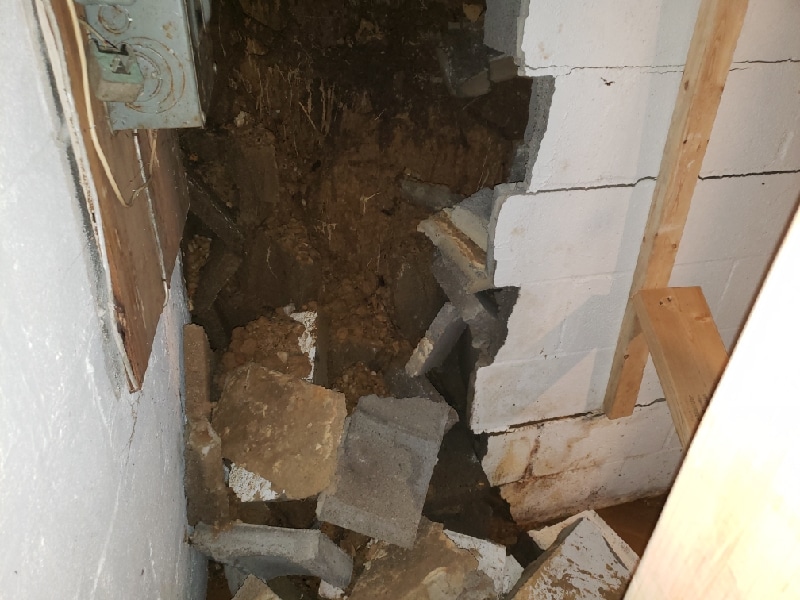
Foundation walls are designed to resist the pressure of the surrounding soil, but those forces change throughout the year. In Northern Virginia, periods of heavy rain, expansive clay soils, and poor drainage can all increase the pressure against basement walls.

A wall with a small horizontal crack today may continue bowing inward if those conditions aren’t corrected. We’ve inspected many homes where homeowners assumed the wall had stopped moving simply because they had grown accustomed to its appearance. After taking measurements, however, we found ongoing deflection that wasn’t obvious to the naked eye.

Addressing wall movement early often provides more repair options than waiting until the wall has experienced significant deflection.

Water Can Make the Problem Worse

Foundation movement and water management are closely connected. In fact, many of the structural problems we see begin with drainage issues rather than defects in the foundation itself.

When gutters overflow, downspouts discharge too close to the home, or grading allows water to collect around the foundation, the soil beneath and beside the house changes. Saturated soil can lose strength, while expansive clay soils swell as they absorb moisture and shrink as they dry out. Over time, these repeated changes place additional stress on the foundation and can contribute to settlement, wall movement, or basement water intrusion.

It’s one of the reasons we always look beyond the visible symptoms during an inspection. Solving the drainage problem is often just as important as repairing the structural damage.

Crawl Space Problems Can Develop Over Time

Homes with crawl spaces can experience another set of issues when foundation movement is ignored. As supports settle or moisture affects the structural wood framing, homeowners may begin noticing sagging or uneven floors, gaps between walls and flooring, or areas that feel soft or bouncy underfoot.

These changes rarely happen overnight. More often, they develop gradually as moisture and movement continue affecting the structural components beneath the home. Catching these issues early can often prevent more extensive repairs later.

Repairs Often Become More Extensive

One thing we’ve consistently observed after evaluating homes across Northern Virginia is that foundation problems rarely become less complicated with time. A repair that might have been limited to stabilizing one area of the foundation can eventually involve additional sections of the home if movement continues unchecked.

That doesn’t mean every homeowner should rush into repairs at the first sign of a crack. Instead, it highlights the importance of determining whether movement is active. A professional evaluation gives you a baseline and allows you to make informed decisions before a relatively small issue grows into a much larger one.

Foundation Problems Can Affect Resale Value

Foundation concerns are among the first things buyers and home inspectors notice during a real estate transaction. Visible cracks, uneven floors, sticking doors, or bowing basement walls often raise questions about the condition of the home and may lead buyers to request additional inspections or repairs.

On the other hand, a home that has been professionally evaluated and repaired when necessary often gives buyers much greater confidence. Documenting the condition of the foundation and addressing problems before listing the home can make the sales process much smoother.

Not Every Foundation Crack Means You Need Repairs

One of the biggest misconceptions about foundation movement is that every crack requires immediate structural work. That’s simply not true.

Concrete naturally develops some cracks as it cures, and minor seasonal movement is common in many homes. The key is determining whether the foundation has stabilized or whether it is continuing to move. That’s why every inspection we perform focuses on understanding the behavior of the structure rather than making recommendations based solely on the appearance of a crack.

Our goal is to identify the cause of the movement, evaluate whether it’s active, and recommend repairs only when they’re truly needed.

Don't Wait Until the Symptoms Become Obvious

Foundation movement is almost always easier to evaluate than it is to predict. The sooner changes are identified, the more information you’ll have about the condition of your home and the more repair options you’ll typically have available if movement is continuing.

If you’ve noticed new cracks, sticking doors, uneven floors, basement wall movement, or other changes around your home, it’s worth having the foundation evaluated before those symptoms become more significant. In many cases, early intervention can prevent additional damage and provide peace of mind, even if no immediate repairs are necessary.

Contact Us for Foundation Repair Solutions in Alexandria

Our team provides professional foundation inspections, structural evaluations, and repair solutions for homeowners throughout Northern Virginia. Whether you’re dealing with foundation settlement, bowing basement walls, crawl space concerns, drainage issues, or foundation cracks, our experienced team can identify what’s causing the movement and recommend the right long-term solution for your home. Contact us today to schedule your inspection.

Get A Free Estimate

DESKA does not sell or distribute your information to any third party services.