Do All Foundation Cracks Need Repair?
If you’ve found a crack in your foundation, your first thought is usually the same. Is this something serious? The short answer is no. Not every crack means there’s a major structural problem. But some cracks do need attention, and knowing the difference is what matters.
Quick Answer
No, not all foundation cracks need repair.
- Small, stable cracks are often normal
- Growing, wide, or shifting cracks usually need to be evaluated
The key is whether the crack is active or just part of normal settling.
Why Foundation Cracks Happen in the First Place
Concrete cracks. That’s just part of how it behaves. In Northern Virginia, soil conditions add to that. Clay-heavy soil expands when it gets wet and shrinks when it dries out. That movement puts stress on the foundation over time. Some cracking is expected because of normal settlement after construction, seasonal soil movement, or minor shrinkage of the concrete. These types of cracks are usually small and won’t change much over time.
Cracks That Are Usually Not a Big Concern
There are certain types of cracks that are fairly common and often don’t require structural repair.
You’ll typically see:
- Thin vertical cracks in poured concrete
- Hairline cracks in basement walls
- Small cracks that haven’t changed over time
If a crack is narrow and stable, it’s often more of a cosmetic issue than a structural one. Even its it leaks, leaky cracks that aren’t structural can often be repaired with epoxy crack injections or carbon fiber overlays.
Cracks That Should Be Taken Seriously
Some cracks are a sign that something is still moving. These are the ones that shouldn’t be ignored.
Look for:
Cracks wider than about 1/4 inch
Cracks that are getting longer or wider
Horizontal cracks in foundation walls
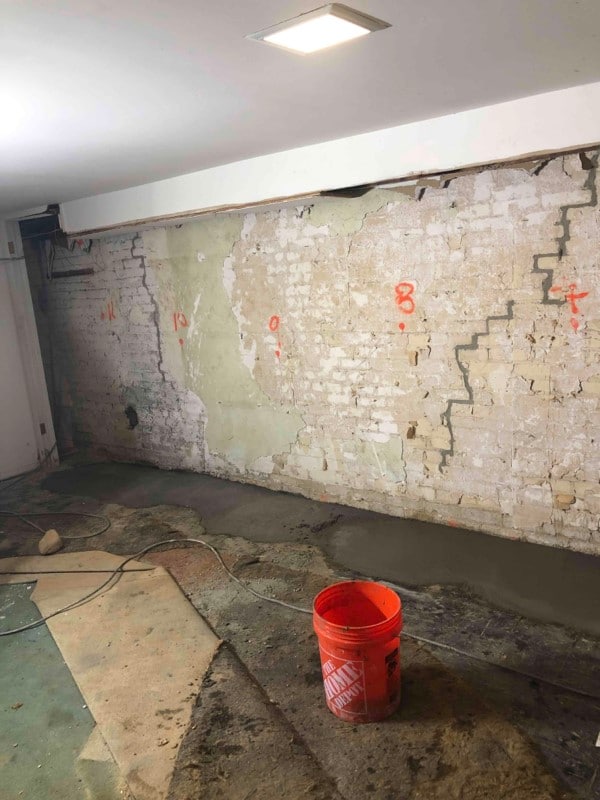
Stair-step cracks in block or brick
Cracks where one side is higher than the other
These usually point to pressure, settlement, or shifting that hasn’t stopped.
Horizontal Cracks Are Different
Horizontal cracks are one of the biggest red flags. They’re typically caused by pressure from soil pushing against the foundation wall. In areas like Alexandria and Northern Virginia, saturated soil can create that pressure pretty easily. If you’re seeing a long horizontal crack, it’s worth having it looked at sooner rather than later.
What About Cracks That Let Water In?
Even if a crack isn’t structural, water changes the equation. If moisture is getting through, the crack is now part of a larger problem. Water intrusion can lead to mold and mildew growth, ongoing dampness, and be a sign of additional pressure on your foundation. In these cases, the crack may not need structural repair, but it does need to be sealed and managed properly.
The Difference Between “Normal” and “Active”
This is the part most homeowners miss. It’s not just about how the crack looks today. It’s about whether it’s changing. A crack that formed years ago and hasn’t moved is very different from one that is still growing. Active cracks will continue to get wider, spread to new cracks, or can be signaled by other changes like sticking windows and doors. Active movement is what usually drives the need for repair.
When Monitoring Is Enough
In some cases, the best approach is simply to keep an eye on it.
You can monitor a crack by:
- Checking it every few months
- Noting any changes in size
- Watching for new symptoms in the home
If nothing changes, it may never become a serious issue.
When It’s Time to Have It Evaluated
There’s a point where guessing isn’t worth it anymore. You should consider a professional evaluation if the crack is wide or growing, you see multiple cracks, there are other signs of movement in your home, or if you have water intrusion during heavy rain. At that point, it’s better to understand what’s happening than to assume it’s nothing.
What Most Homeowners Get Wrong
The biggest mistake is going to extremes. Some people ignore cracks completely. Others assume every crack is a major structural issue. The reality is somewhere in the middle. Most cracks are manageable. Some are not. The difference comes down to movement and pressure.
Contact us For Expert Foundation Repair
If you’re not sure whether a crack in your foundation needs attention, it’s worth having it looked at. At DESKA Foundation Repair, we help homeowners throughout Alexandria and Northern Virginia determine whether cracks are normal or a sign of something more serious.
Contact our team today to schedule an inspection and get a clear answer on what’s happening with your foundation.