Can Poor Drainage Cause a Retaining Wall to Fail?
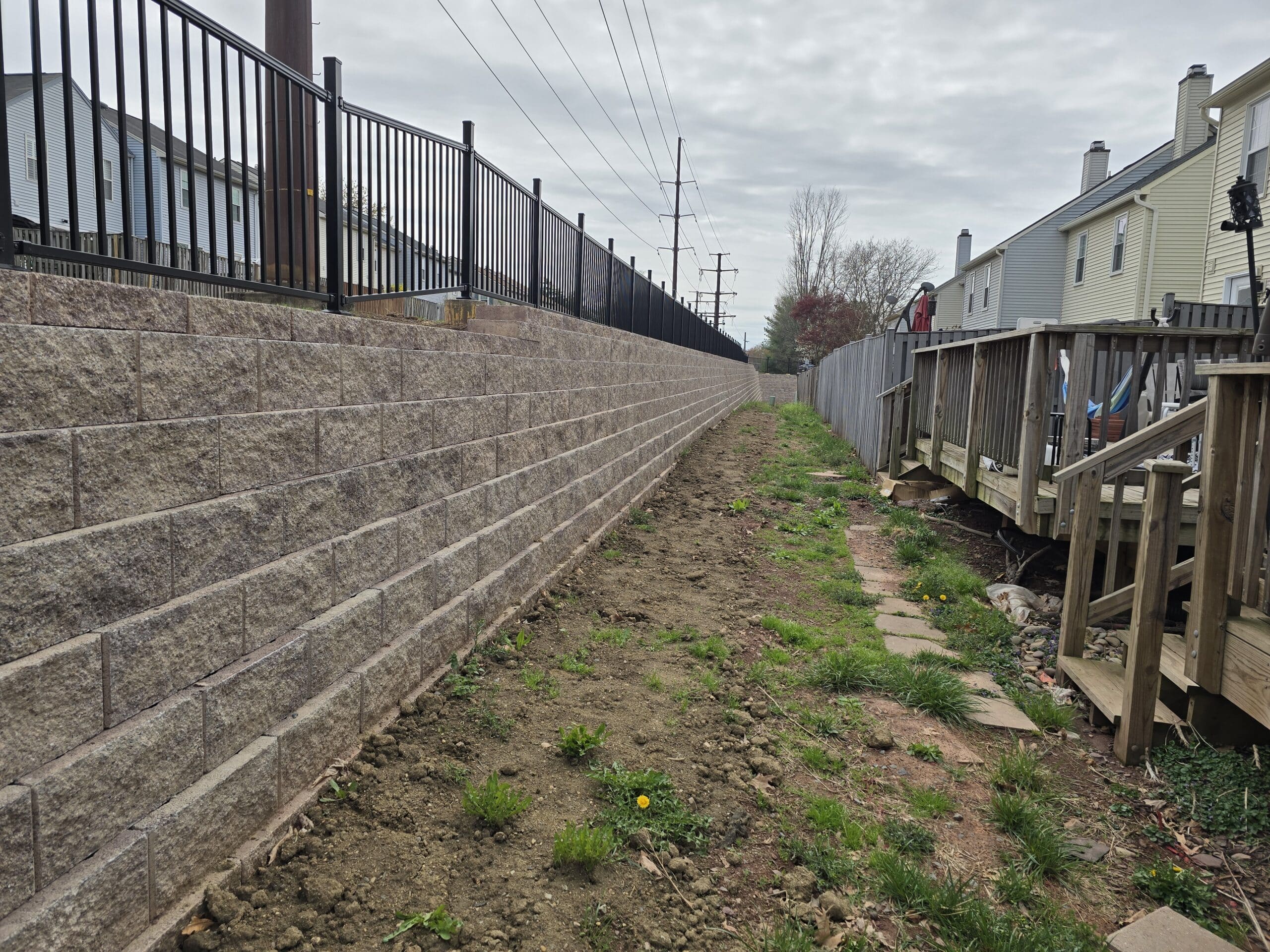
Yes. Poor drainage can be one of the major factors behind a leaning, cracked, or failing retaining wall.
A retaining wall has to resist the pressure of the soil behind it. When water collects in that soil and cannot drain properly, the wall may be subjected to considerably more pressure than it was intended to handle. Over time, that additional pressure can contribute to cracking, movement, rotation, or other signs that the wall is no longer performing as intended.
At DESKA, we do not look at a failing retaining wall as a concrete, block, or masonry problem alone. We also want to understand what is happening behind and around the wall, including the slope, soil, drainage, runoff, and how water leaves the property.
Why Water Behind a Retaining Wall Can Become a Structural Problem
Soil already places lateral pressure against a retaining wall. When that soil becomes saturated, water adds weight and can create hydrostatic pressure behind the wall. If the drainage system cannot relieve that water, the force against the wall can increase as the ground becomes wetter.
This is one reason a retaining wall may appear relatively stable during dry weather but show more obvious problems after periods of heavy or prolonged rain. Northern Virginia, Washington, D.C., and Maryland properties can also have slopes, dense soils, landscaping, and drainage patterns that direct significant amounts of water toward a retaining wall.
The wall still needs to be capable of resisting the soil behind it, but good drainage is part of allowing the wall to perform as designed. A structurally adequate retaining wall can still develop problems if water is repeatedly allowed to build behind it.
What Drainage Problems Do We Look For Around a Retaining Wall?
When we evaluate a retaining wall, we look beyond the visible crack or lean. We want to understand where water is coming from, how it moves across the property, and whether it has a reliable path away from the wall.
Roof runoff and downspouts can contribute if they discharge toward the retained area. Poor grading can direct surface water toward the wall instead of away from it, while an uphill property or slope may continue feeding water into the soil long after the rain stops. Landscaping changes, clogged drainage components, or an old drainage system can also change how much water collects behind the wall.
We may also look for evidence of water escaping through joints, staining on the wall, erosion around the base, washed-out soil, or areas of the yard that remain saturated. Those conditions do not automatically tell us the wall is structurally failing, but they help us understand the environment the wall has been dealing with.
Cracking and Leaning Can Tell Us How the Wall Is Responding
Retaining-wall problems can show up in several ways. Some walls begin to lean or rotate outward at the top. Others develop cracks, bulges, separation between sections, or movement at the base.
The pattern matters. A crack by itself does not tell us exactly why the wall moved, just as a wet area behind the wall does not prove that drainage is the only problem. We compare the visible movement with the wall construction, height, slope, surrounding soil, drainage conditions, and any evidence that the foundation or footing beneath the wall has moved.
Drainage may be contributing to the pressure while another structural issue is also present. The wall may have inadequate reinforcement, insufficient footing support, poor construction, deterioration, or movement beneath the base. In other cases, the wall itself may have been reasonably built but has spent years dealing with water that was never properly managed.
That distinction matters because correcting the drainage without addressing an already unstable wall may not be enough.
Fixing the Water Does Not Automatically Fix the Wall
One of the most important things homeowners should understand is that drainage improvements and structural repair do different jobs.
If we improve grading, redirect a downspout, repair a drain, or install a better way for water to escape, we may reduce the pressure acting on the retaining wall. That can be an important part of preventing additional problems, but it does not automatically move a leaning wall back into position or repair structural damage that has already occurred.
The opposite is also true. Rebuilding or stabilizing a retaining wall without correcting a significant drainage problem can leave the new or repaired structure exposed to the same conditions that contributed to the original failure.
This is why the repair plan may need to address both the structure and the water around it. The goal is not just to make the wall look straight again. We want to understand why it moved and reduce the conditions that could make the problem return.
What We Evaluate Before Recommending Retaining Wall Repair
A retaining wall is part of a larger site, so we evaluate it in that context. The visible movement is important, but so are the loads behind the wall and the conditions beneath it.
| What We Check | What It Helps Us Understand |
|---|---|
| Wall lean or rotation | How the wall has moved |
| Crack pattern | Where stress or movement is concentrated |
| Wall construction | How the wall was built and reinforced |
| Footing or base | Whether the wall has stable support |
| Soil behind the wall | What loads the wall is retaining |
| Surface grading | Whether runoff is directed toward the wall |
| Downspouts and roof runoff | Whether concentrated water is reaching the retained soil |
| Existing drainage | Whether water has a way to escape |
| Erosion or soil loss | Whether water is removing support |
| Nearby slopes and structures | Whether additional loads may be affecting the wall |
| Previous repairs | Whether movement has been addressed before |
We want those observations to fit together before deciding what type of repair makes sense. Sometimes drainage correction is a major part of the solution. Other times the wall has moved far enough that stabilization, reconstruction, or another structural repair also needs to be considered.
When Should a Retaining Wall Be Evaluated?
A retaining wall does not have to collapse before it deserves attention. A wall that is visibly leaning, developing new cracks, separating at joints, bulging, or moving at the base should be evaluated, especially if those symptoms appear to be getting worse.
We also pay attention when the surrounding drainage has changed. A new landscaping project, redirected downspout, neighboring construction, slope modification, or drainage failure can change the amount of water and soil pressure a retaining wall has to handle.
Older movement may sometimes be stable, while new or progressive movement deserves a closer look. That is why the history of the wall is useful. Knowing whether a crack appeared recently or whether the wall has looked the same for many years helps us understand what we are seeing today.
Why an Engineering-Based Evaluation Matters
Retaining walls are structural systems. A repair should account for the wall itself, the soil it is retaining, the foundation or footing below it, and the water moving around it.
At DESKA, our team combines structural evaluation with foundation, drainage, waterproofing, and repair experience. That allows us to look at whether poor drainage is contributing to the problem without assuming drainage is the only cause.
If your retaining wall is leaning, cracking, bulging, or showing signs of movement, our team can evaluate the wall and the surrounding site conditions throughout Northern Virginia, Washington, D.C., and Maryland. We can help determine whether the problem is primarily related to drainage, structural support, soil pressure, or a combination of conditions and explain what type of repair makes sense for the property.