What Does Fairfax County “Problem Soil” Mean for My Foundation?
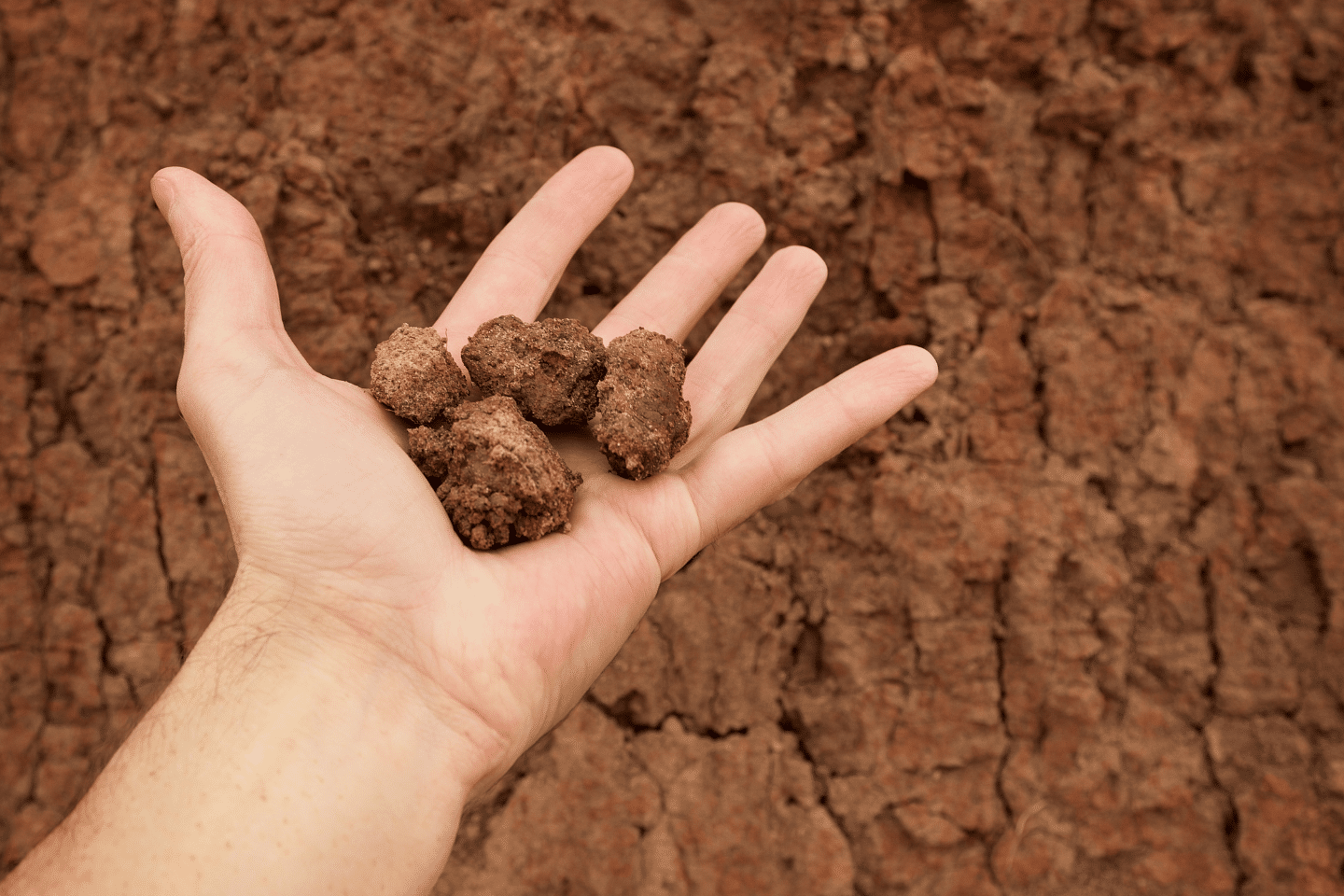
If Fairfax County shows your property in an area with problem soil, that does not mean your foundation is failing. The county uses its soil maps and classifications to identify conditions that may require more careful design, drainage, inspection, or engineering for certain types of construction.
For an existing homeowner, we look at that information as context. It tells us something about the ground beneath or around the house, but it does not tell us whether your particular crack, uneven floor, bowed wall, or water problem was caused by that soil. We still need the structure itself to provide the rest of the evidence.
That distinction is important in Fairfax County because the soil conditions can change considerably from one property to another. DESKA's current foundation guidance makes the same point: expansive soil, disturbed soil, drainage, groundwater, slopes, and other site conditions can all matter, but we evaluate the individual home rather than assume that every foundation problem in Northern Virginia has the same cause.
What Fairfax County Means by “Problem Soil”
Fairfax County uses soil information to help identify conditions that may complicate how a foundation, footing, drainage system, or other part of a project should be designed. The category is broader than marine clay.
The county’s current requirements tell designers to consider conditions such as high water tables, expansive clays, unstable excavations and slopes, low bearing capacity, footing depth and size, backfill, lateral soil pressure, drainage, and frost. Depending on the mapped condition and the work being proposed, the plans may require additional engineering or foundation drainage.
Homeowners may see abbreviations such as EDR or FDR in county materials. EDR means an engineered foundation design is required for the applicable project in problem soil, while FDR means foundation drains are required for that scope. The county also uses design notes addressing whether footings or piers must bear on competent undisturbed soil or extend through previously disturbed material.
Those terms are useful when you are reading a permit record, soil map, or construction document, but they should not be treated as a diagnosis of an existing house. A requirement that applies to new construction, an addition, or a permitted repair does not automatically mean an older foundation needs structural work today.
Marine Clay Is One Type of Problem Soil
Marine clay gets a lot of attention in Northern Virginia, particularly around eastern Fairfax County, but it is only one part of the larger soil picture.
Fairfax County describes marine clay as soil with a high potential to shrink when dry and swell when wet. It can also have poor drainage, lower bearing strength, and slope-stability concerns. The county says these deposits occur primarily in the Coastal Plain east of I-95 and I-395, including areas around Mount Vernon and other eastern portions of the county.
On the county soils map, these areas may be identified as Marumsco soil or Previously Mapped Marine Clay. If you are trying to determine whether your property is in one of those areas, the county recommends checking the official Digital Map Viewer by address rather than making the assumption from a neighborhood name or ZIP code.
That is especially relevant for homeowners around our Mount Vernon service area, but even there we would not look at a foundation crack and immediately call it marine-clay damage. Fairfax County itself specifically warns that not every crack in a home is caused by marine clay.
The soil information becomes much more useful when it lines up with what the house is actually doing.
How Problem Soils Can Affect an Existing Foundation
Different soil conditions affect foundations in different ways. Expansive clay can change volume as moisture levels change, while soft or low-bearing soil may provide uneven support beneath a footing. High groundwater and poorly draining soils can also change the amount of moisture around the foundation and increase pressure against basement walls.
When those conditions affect one section of a house more than another, we may see differential settlement. That means one part of the foundation has moved differently from another part. Signs can include stair-step masonry cracks, changing floor elevations, sticking doors or windows, separation around trim, or cracks that continue to reopen after cosmetic repair.
Expansive or wet soil can also contribute pressure against basement walls. A wall that develops horizontal cracking, inward bowing, or movement near the top may be reacting to lateral soil or water pressure outside. DESKA’s bowed-wall guidance explains that soil moisture, drainage, grading, and exterior conditions all need to be considered along with the wall itself.
Slope is another issue. Fairfax County notes that some marine-clay areas can experience slope movement, particularly during wetter periods, and that changes in loading or large amounts of rain or snow can contribute to instability.
None of those mechanisms means that one visible symptom proves what the soil is doing. A sloping floor can come from framing. A foundation crack can be stable. A bowed wall can involve backfill, water, construction, or previous damage in addition to the native soil.
That is why we do not diagnose the ground from the crack alone.
The County Soil Map Is a Clue, Not the Final Answer
For an existing home, the most useful way to think about the Fairfax County soil map is as another piece of the diagnostic picture.
If the map shows a potentially expansive or low-bearing soil and the home has a changing crack, measurable settlement, or a wall that is moving, that information becomes relevant. It may help explain why we want to look more closely at the relationship between the foundation, drainage, slope, and soil conditions.
If the map shows problem soil but the house has been stable for decades with no evidence of active structural movement, the map by itself does not create a repair need.
When we perform a structural evaluation, we are looking at the structure as it exists today. DESKA has licensed professional engineers on staff, and foundation cracks, settlement, bowed walls, uneven floors, and other structural concerns are among the conditions we evaluate.
We may look at crack patterns, floor elevations, wall movement, foundation construction, drainage, previous repairs, and how the symptoms relate to one another. The question we are trying to answer is not simply, “Is this house in a problem-soil area?” It is, “What is the structure actually doing, and does the soil information help explain it?”
Structural Engineering and Geotechnical Engineering Answer Different Questions
This distinction is especially important with problem soils.
A structural engineer evaluates what is happening to the building and how the foundation and other structural components are performing. At DESKA, that can include foundation movement, wall conditions, framing, floor elevations, load paths, and the type of repair that may be appropriate. Our foundation settlement repair process starts with identifying what part of the structure is moving and what conditions may be contributing before a pier system or another structural repair is selected.
A geotechnical engineer focuses more directly on the soil and subsurface conditions. That work can involve soil borings, test pits, laboratory information, slope analysis, and evaluation of how the soil will support or interact with a proposed repair. Fairfax County’s homeowner guidance specifically points to geotechnical engineers for evaluation and repair design when marine clay itself needs to be investigated.
Not every homeowner with a crack needs a geotechnical report. If the structural problem can be understood from the building and site conditions, a structural evaluation may be the appropriate first step. When the soil itself needs to be tested or a repair depends on confirming subsurface conditions, geotechnical work may become part of the process.
That is different from simply seeing “marine clay” on a map and assuming soil testing is automatically required.
Drainage Still Matters Even When the Soil Is the Bigger Concern
One thing Fairfax County emphasizes repeatedly in its soil guidance is moisture management. For marine clay, the county recommends maintaining positive grading, keeping gutters in good repair, directing downspouts away from the house, and avoiding large changes in soil moisture around the foundation.
That does not mean drainage can repair a foundation that has already settled or a wall that has already moved. It means water conditions around the house can affect the soil environment the foundation is sitting in or resisting.
DESKA sees the same relationship in its foundation and bowed-wall work. Poor grading, concentrated runoff, short downspouts, saturated soil, and inadequate drainage can contribute to conditions around a foundation even when they are not the only cause of the structural problem.
For some properties, drainage improvements may be part of protecting a structural repair. For others, drainage is the larger problem and structural repair is not necessary. We want the evidence to tell us which situation we are dealing with.
What Should a Fairfax County Homeowner Do Next?
If you are researching problem soils because you found your property on the Fairfax County map, start by checking the specific soil designation rather than relying on a general neighborhood description. The county’s official soils resources and Digital Map Viewer are the right starting point for that information.
Then look at the house itself. A mapped soil condition becomes more meaningful when you also have symptoms such as new or changing foundation cracks, uneven floors, sticking doors, wall movement, or repeated structural repairs that are no longer holding.
If those symptoms are present, we can evaluate the foundation and structure and determine whether the soil information appears relevant to what the house is doing. DESKA serves Fairfax County from our Northern Virginia offices, including Herndon and Mount Vernon, and our team includes licensed engineers along with foundation, structural, waterproofing, and drainage professionals.
The important thing to remember is that problem soil is a risk factor and design consideration, not a diagnosis. The map tells us where to look more closely. The condition of the actual home tells us whether there is a structural problem that needs to be repaired.