Foundation Settlement Repair in Alexandria, VA
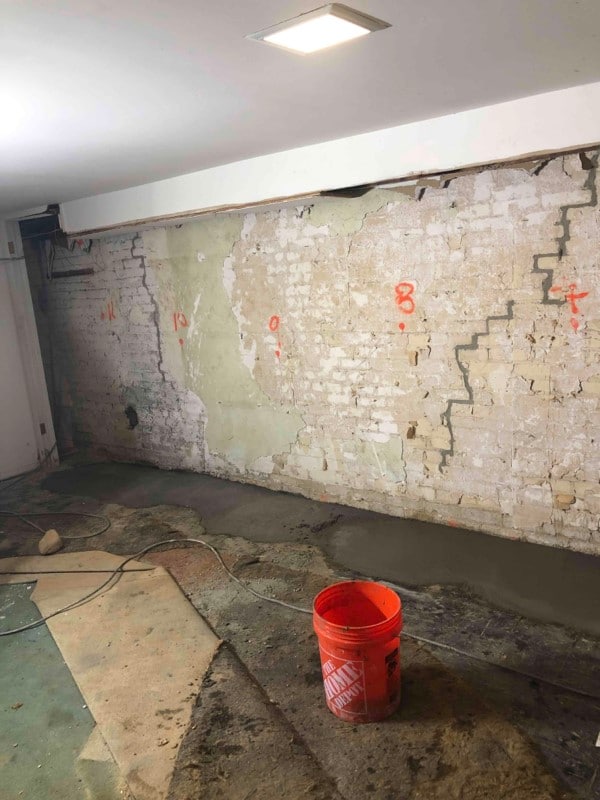
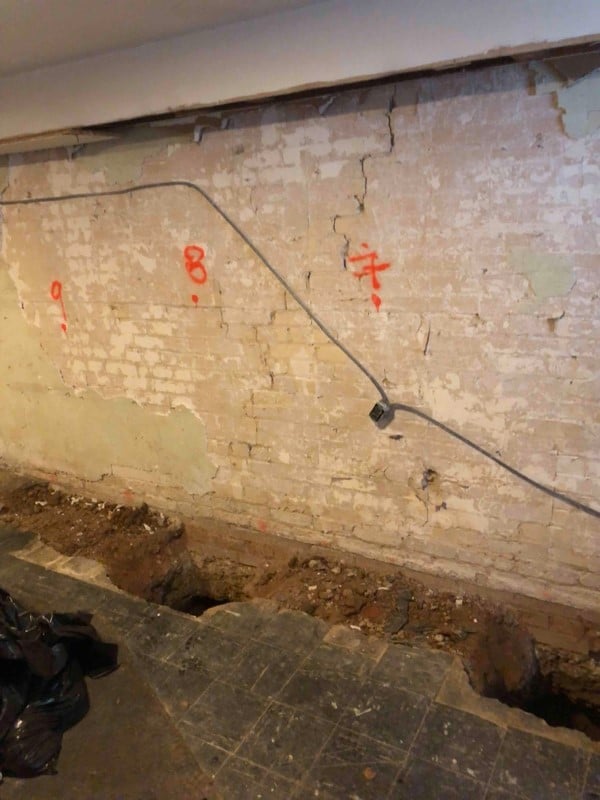
Stair-step cracks in brick, floors that slope toward one side of the house, doors that no longer latch, or a chimney pulling away from your home can all be signs of foundation movement. They do not automatically mean you need foundation piers. When our team evaluates these problems, we first want to determine what is moving, why it is moving, and whether the foundation has lost reliable support.
At DESKA, we provide foundation settlement repair throughout Northern Virginia, Washington, DC, and Maryland. Founded in 2012, our company combines licensed Professional Engineers with structural contracting experience and certified foundation repair systems. That gives our team the ability to look at foundation settlement as both an engineering problem and a construction problem.
We want you to understand what is happening to your home before we talk about how to fix it. If a structural repair is needed, we will explain what we recommend and why.
Signs Your Foundation May Be Settling
Foundation settlement often affects more than one part of a home. When one section of the foundation moves relative to another, the resulting stress may show up in masonry, drywall, floors, doors, windows, and attached structures.
When we inspect a home for possible settlement, some of the conditions we look for include:
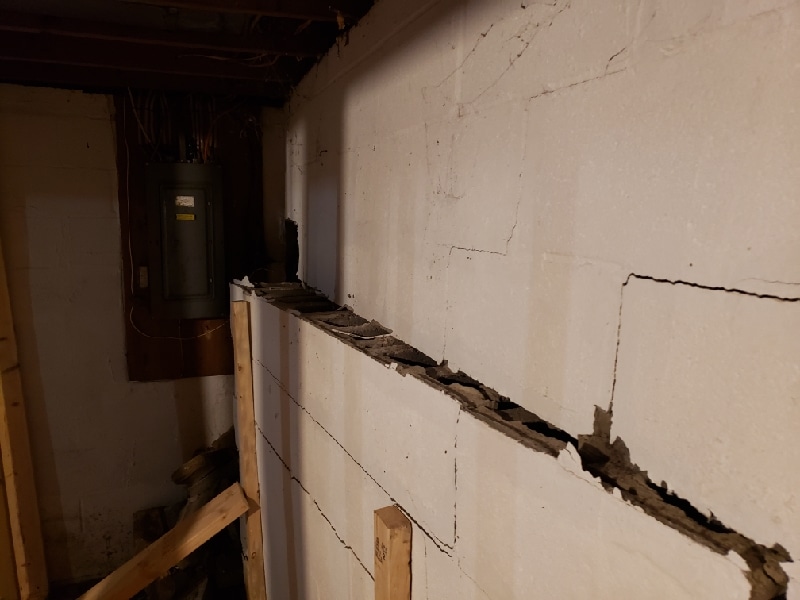
- Stair-step cracks through brick or masonry joints
- Foundation wall cracks that appear to be changing
- Drywall cracks that repeatedly reopen
- Uneven or sloping floors
- Doors that rub, stick, or no longer latch correctly
- Windows that become difficult to open or close
- Gaps around doors, windows, trim, cabinets, or walls
- A chimney, porch, stoop, or addition separating from the house
- Visible sinking or displacement along part of the foundation
- Several symptoms developing in the same area of the home
These conditions can be associated with foundation distress, but a single crack or sticking door does not prove that settlement is the cause. Houses move for different reasons, and some cracks are far more significant than others.
Our team looks at the overall pattern rather than treating one isolated symptom as proof of a foundation problem. If you have repaired the same crack more than once, several symptoms have appeared together, or the condition seems to be getting worse, we can help determine whether continued structural movement is involved.
What Foundation Settlement Means
Your foundation depends on the soil beneath it to support the weight of the house. If that support changes, one portion of the foundation can move downward more than another. This is commonly called differential settlement.
The crack you see on a wall is often a result of that movement rather than the underlying problem itself. Patching the crack may improve its appearance, but it will not stabilize a foundation that is continuing to move.
We also need to distinguish settlement from other foundation problems. A basement wall being pushed inward, an isolated concrete slab that has sunk, a leaking crack, and a load-bearing foundation that has settled may look similar at first, but our team may recommend very different repairs for each condition.
That distinction is important to how we approach foundation work. We do not start an inspection by assuming your home needs a certain product. We start by identifying the problem.
Why Foundations Settle in the DC Metro Area
There is no single soil condition beneath every home in Northern Virginia, Washington, DC, and Maryland. Foundation performance can be influenced by soil type, changes in moisture, drainage, erosion, fill placed during construction, slope conditions, structural loads, and changes made around the property over time.
Local soil conditions are particularly important in portions of Northern Virginia. Some areas contain clay-rich soils that can change as moisture conditions change. Other properties may have fill, low-bearing soils, groundwater concerns, or site-specific conditions that affect how the foundation is supported.
Because these conditions can vary from one property to another, we do not diagnose settlement from a ZIP code or neighborhood name. Our team evaluates what is happening at your home.
Soil and Moisture Conditions
Some soils can expand when they become wet and shrink as they dry. Other soils may compress, erode, or lose supporting capacity under certain conditions. When we evaluate settlement, we want to understand whether the soil beneath the affected part of the foundation is providing stable support for the structure.
Water around a foundation can also influence soil conditions. Downspouts that empty too close to the house, poor grading, leaking utilities, concentrated runoff, and drainage problems can all affect how water moves through the soil.
Our team looks at these conditions because the repair should address the actual problem we find. If water movement or drainage appears to be contributing to the settlement, we want you to know that before structural work begins.
Drainage, Erosion and Disturbed Fill
A home or addition constructed over inadequately compacted fill can behave differently from a structure bearing on suitable undisturbed soil. Soil can also be affected by erosion, excavation, drainage changes, and water movement around the property.
Correcting a drainage problem can be an important part of protecting a property, but drainage work does not automatically restore structural support that has already been lost. When both conditions are present, our team may recommend addressing them together.
The same is true in the other direction. Installing a pier may stabilize part of a structure, but if water is continuing to cause erosion or unfavorable soil conditions nearby, we still want to identify that contributing condition. Our goal is to look beyond the visible crack and understand what is affecting the home as a whole.
Why the Engineering Evaluation Matters
Foundation settlement repair affects the structural support of your home. Before we select a pier system, the evaluation should establish which part of the structure is moving, the pattern of movement, and the likely contributing conditions. We also consider the foundation type, structural loads, site access, and what the repair needs to accomplish.
Our engineers look at the structure as a system. A crack becomes more meaningful when we understand where it is located, what load is being carried above it, how floor and wall elevations relate to it, and whether other signs of movement are developing nearby.
When we inspect a home, we are not trying to prove that a structural repair is necessary. In some cases, our recommendation may involve monitoring, drainage improvements, crack repair, wall stabilization, or another service instead of underpinning. If we do not believe piers are the appropriate solution, we want to explain that clearly.
DESKA has Professional Engineering licenses in Virginia, Washington, DC, and Maryland, along with a Virginia Class A Contracting License and Washington, DC contracting license. By having engineering and contracting capabilities within DESKA, our team can evaluate a structural problem and, when repair is needed, carry that solution through construction.
This can be especially important in jurisdictions where structural foundation work may require engineering documentation, soil evaluation, permitting, or other design information.
If you are seeing signs of movement in your home, schedule an inspection with our team.
Foundation Settlement Repair Options
There is no single foundation pier that is right for every property. When we develop a repair plan, we consider your home’s structure, foundation type, loads, soil conditions, settlement pattern, access, and the goal of the repair.
Because our team works with multiple foundation stabilization systems, we can select the repair based on the conditions we find rather than beginning with one product.
Push Piers and Resistance Piers
Push piers, sometimes called resistance piers, are steel foundation supports installed beneath an existing structure. A bracket is attached to the foundation, and steel pier sections are hydraulically advanced into the ground.
The existing structure provides reaction during installation. Once the required support conditions are reached, the system transfers structural load away from inadequate near-surface soil to suitable supporting material below.
Our team is certified for Atlas Resistance Pier installation. Push piers can be an effective solution for some existing structures, but the home needs to provide enough reaction for the installation method, and the system still needs to match the engineering requirements of the project.
When we recommend a push pier system, we should be able to explain why that system fits the structure and the repair objective.
Helical Piers
Helical piers are steel foundation supports with helical plates that allow the pier to be rotated into the soil. Installation continues based on the design and capacity requirements of the project, and the completed pier is connected to the structure with a foundation bracket.
Helical piers can be used in a range of structural support applications. Depending on the structure and site, they may be a better fit than a resistance pier.
DESKA is A.B. Chance Helical Pier Certified, and our team has experience working with helical foundation systems.
The choice between a push pier and a helical pier should be based on your home and site conditions, not on a claim that one system is always better than the other. We make that recommendation after evaluating what the structure requires.
Helical Pulldown® Micropiles
Our team is also A.B. Chance Helical Pulldown Micropile Certified. These systems combine helical foundation technology with grout to create an engineered deep-foundation support that may be appropriate for certain structural and soil conditions.
Micropiles are not an automatic solution for common foundation cracking. Their use depends on the loads, subsurface conditions, required capacity, and engineering needs of the project.
If we recommend this type of system for your home, we will explain why it was selected, how it works, and what we expect it to accomplish.
GroutForce™ Displacement Piles
GroutForce Displacement Piles provide another engineered deep-foundation option for certain settlement conditions. As with our other foundation support systems, we consider this method only after evaluating the structure and site.
We do not expect you to know which type of pier or pile your home needs before you call us. That is part of the work our team does during the evaluation and repair-design process.
When Foundation Piers May Not Be the Right Repair
Not every foundation-related symptom calls for underpinning. This is an important part of the conversation we have with homeowners because several different structural or moisture problems can produce similar symptoms.
A wall that is bowing inward because of lateral soil pressure may require wall stabilization rather than settlement piers. That type of movement places different forces on the structure, so our team evaluates it differently.
A non-load-bearing slab that has sunk may be a concrete-leveling problem instead of a foundation settlement problem. Sidewalks, patios, garage slabs, and other concrete surfaces can settle without requiring us to underpin the house.
A stable crack that allows water through a basement wall may need crack repair or waterproofing. Sagging floors over a crawl space may involve joists, beams, moisture damage, or support conditions beneath the floor system.
Because our team works on structural repair, waterproofing, drainage, concrete, crawl spaces, and other related problems, we can look at the condition in front of us and recommend the service that fits. We do not want to force every homeowner into the same repair.
Our Foundation Settlement Repair Process
Foundation Inspection
Our team performs a detailed inspection of your home and foundation to identify signs of movement and structural distress.
Engineering Evaluation
We assess contributing factors such as soil conditions, drainage issues, settlement patterns, and structural loading.
Repair Plan Development
Based on our findings, we develop a customized repair strategy designed to stabilize the structure and prevent additional movement.'
Foundation Stabilization
Our crews install the appropriate foundation support systems to restore stability and transfer structural loads to more suitable bearing soils.
Long-Term Protection
Once repairs are complete, your home benefits from improved stability and protection against ongoing settlement issues.
How Our Team Approaches Foundation Settlement Repair
Our settlement process begins with a foundation inspection followed, when appropriate, by an engineering evaluation. We look at the visible symptoms, the structure, and the conditions that may be contributing to the movement.
Depending on the property and jurisdiction, our team may also need engineering documentation, soil information, permitting, or additional investigation. We determine those needs from the actual scope instead of assuming every project follows the same process.
Once we understand the problem, we develop a repair recommendation. If foundation stabilization is required, our plan will address the support system, installation locations, structural considerations, and the objective of the repair.
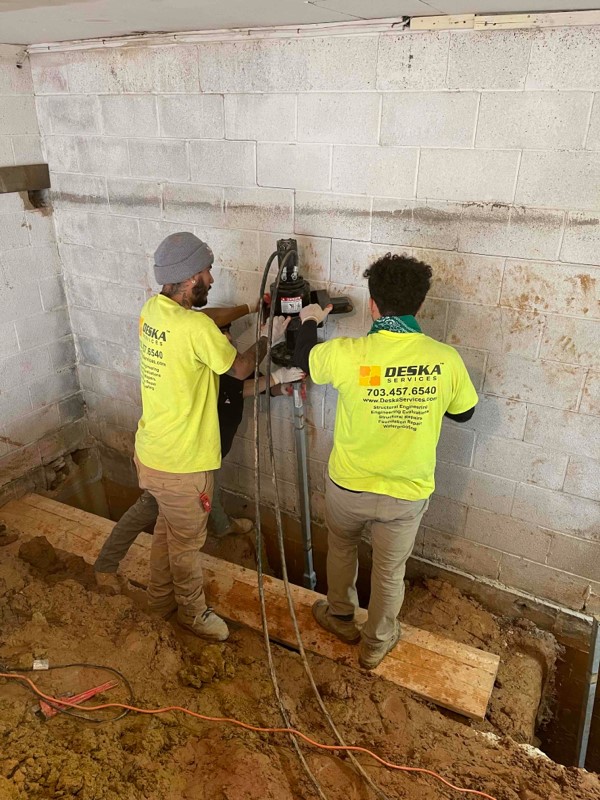
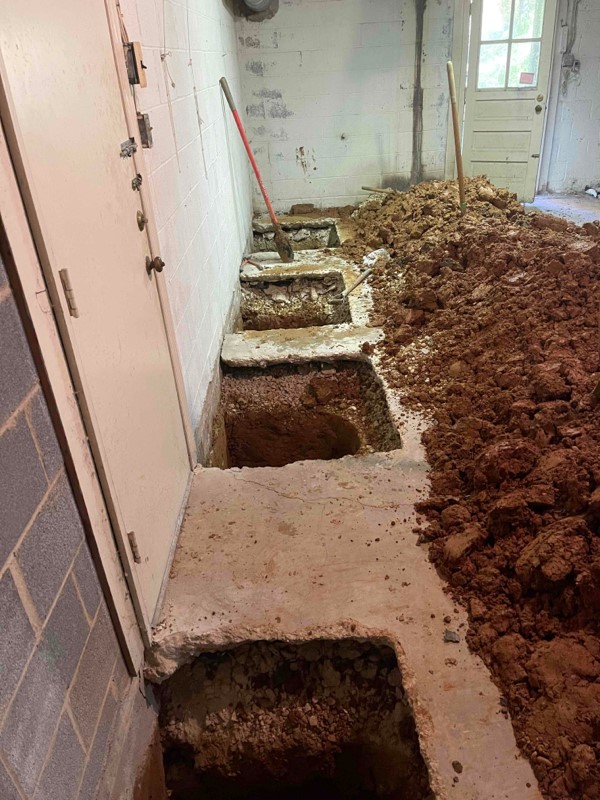
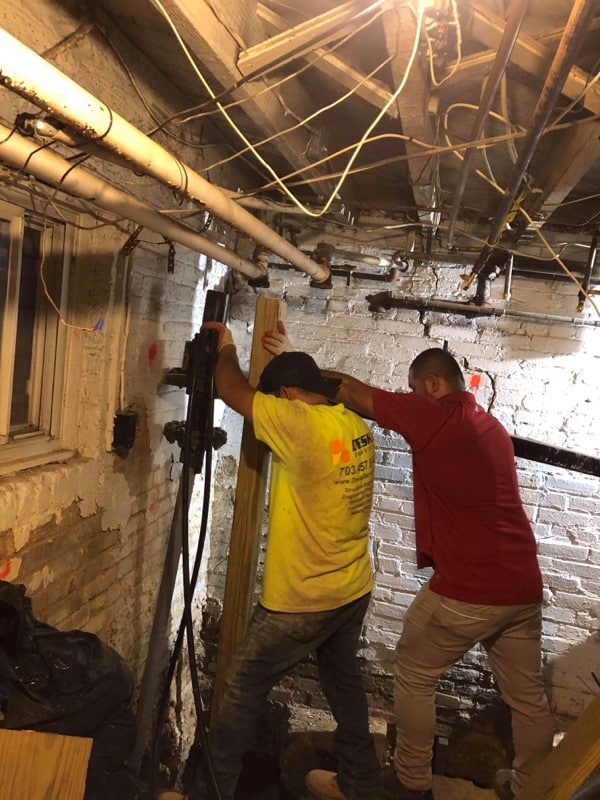
During construction, our crews expose the necessary sections of the foundation, install the specified support system, transfer the appropriate structural load to the new supports, and complete the work required by the repair plan. Restoration, testing, documentation, and related repairs depend on the scope of your project.
Throughout the process, we want you to understand three things: what we found, what we recommend, and why we recommend it.
What Affects Foundation Settlement Repair Cost?
Foundation settlement repair cannot be accurately priced from the number of cracks you can see. A small localized repair and a home requiring multiple deep foundation supports are very different projects.
When our team develops an estimate, factors that may affect the cost include:
- The number of foundation supports required
- The type of pier, pile, or underpinning system
- Foundation construction and structural loads
- Depth and soil conditions
- Exterior or interior access
- Excavation requirements
- Obstructions around the foundation
- Engineering requirements
- Permit requirements
- Whether structural lifting is appropriate
- Restoration after installation
- Related drainage, crack, wall, waterproofing, or concrete work
We prefer to evaluate your home before giving you a repair estimate. A price-per-pier number without understanding the design, quantity, location, and purpose of those piers does not tell you what your project will actually require.
We also offer financing through Momnt for qualified borrowers. Current options may include project financing up to $75,000, monthly payment options, a soft credit pull when reviewing offers, and no early payment penalties. Financing terms and eligibility are determined through the financing provider.
Stabilizing a Foundation Versus Lifting It
Homeowners sometimes ask us whether foundation repair will put every part of the house back exactly where it was when the home was built. We cannot answer that responsibly until we have evaluated the structure.
The primary objective of a deep-foundation repair is to provide reliable support and control continued settlement. Depending on the condition of your home, the repair system, and the engineering plan, some controlled lifting may be possible.
Our team approaches lifting carefully. Walls, framing, masonry, plumbing, finishes, windows, and other building components may have adjusted to the home’s current position over time. Moving the structure can affect those components.
Before installation starts, we will explain whether the goal of your project is stabilization, elevation recovery, or a combination of the two. We want you to know what the repair is intended to accomplish before our crews begin work.
Why Homeowners Choose DESKA for Foundation Settlement Repair
DESKA was founded in 2012, and our foundation work brings engineering and contracting capabilities together within one company.
Our team includes licensed Professional Engineers, structural professionals, and trained installation crews. For foundation settlement repair, our relevant credentials include:
- Professional Engineering licenses in Virginia, Washington, DC, and Maryland
- Virginia Class A Contracting License
- Washington, DC Contracting License
- B. Chance Helical Pier Certification
- B. Chance Helical Pulldown Micropile Certification
- Atlas Resistance Pier Certification
Those credentials matter because foundation settlement involves much more than installing steel in the ground. We need to determine where support has been lost, what loads need to be carried, which repair system is appropriate, and what the completed repair needs to accomplish.
We also offer up to a lifetime warranty on qualifying structural repairs. The specific warranty for your project, including coverage, limitations, exclusions, and remedies, will be defined in the written agreement.
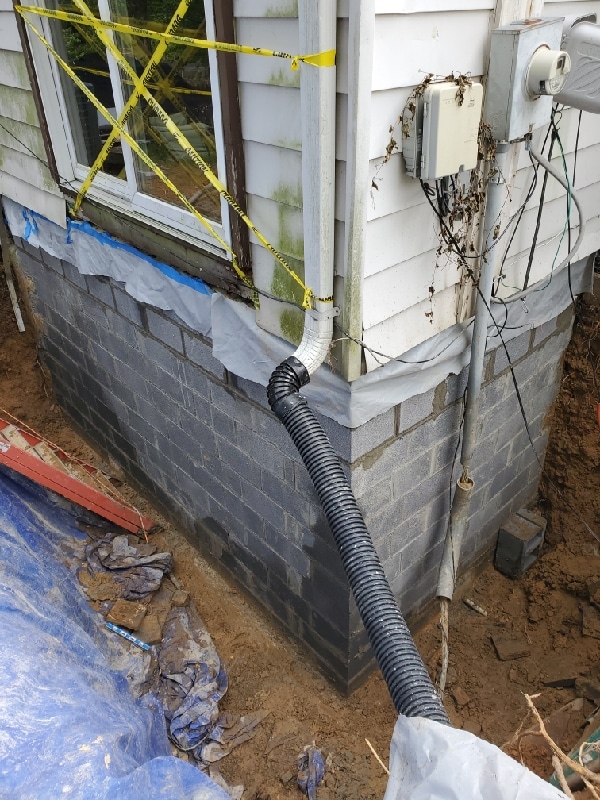
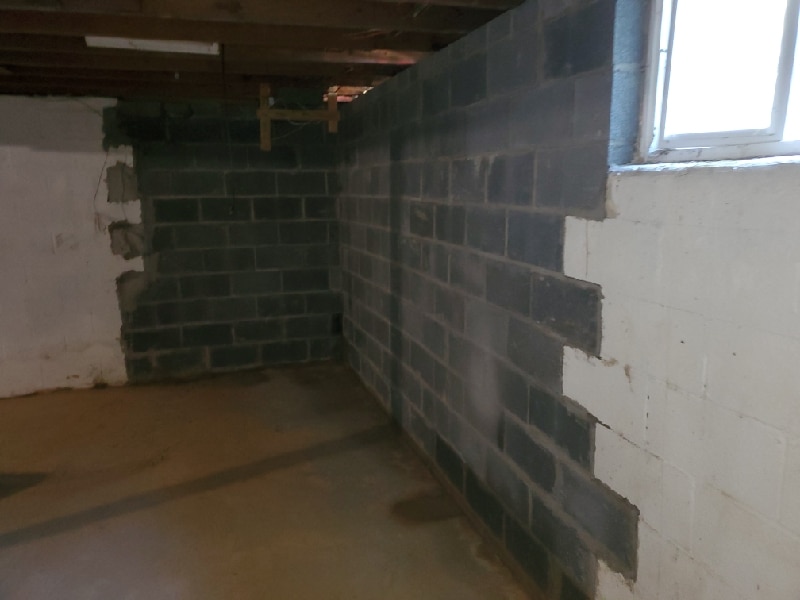
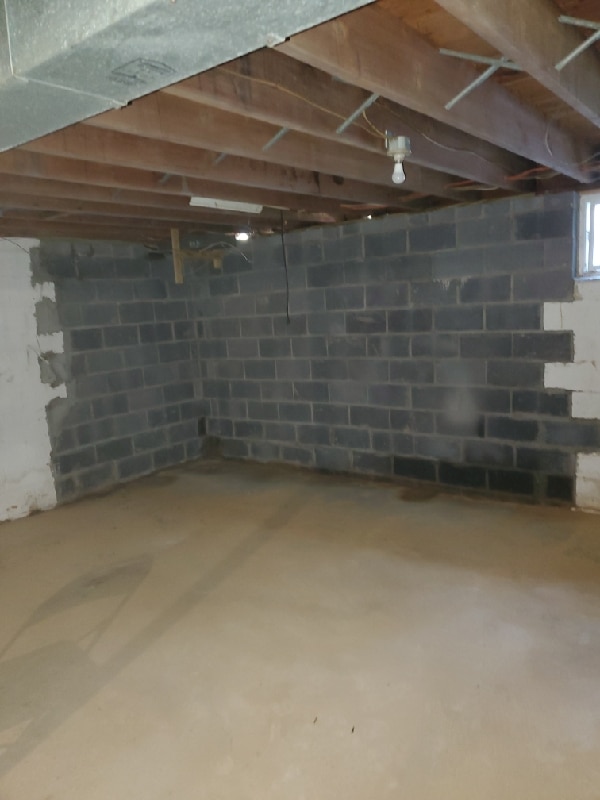
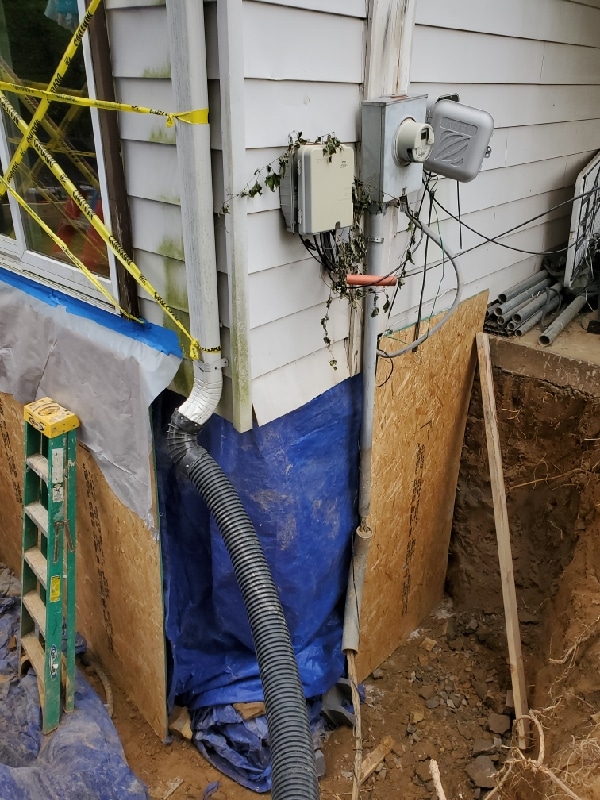
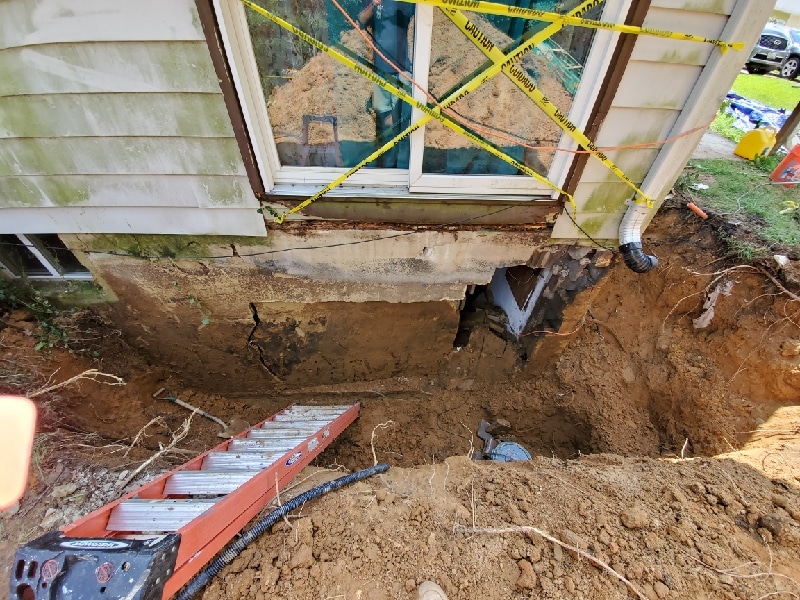
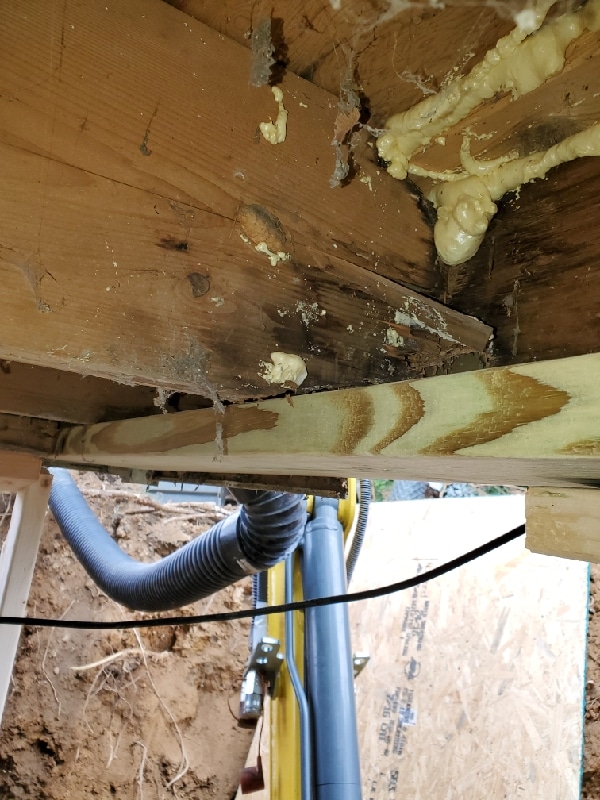
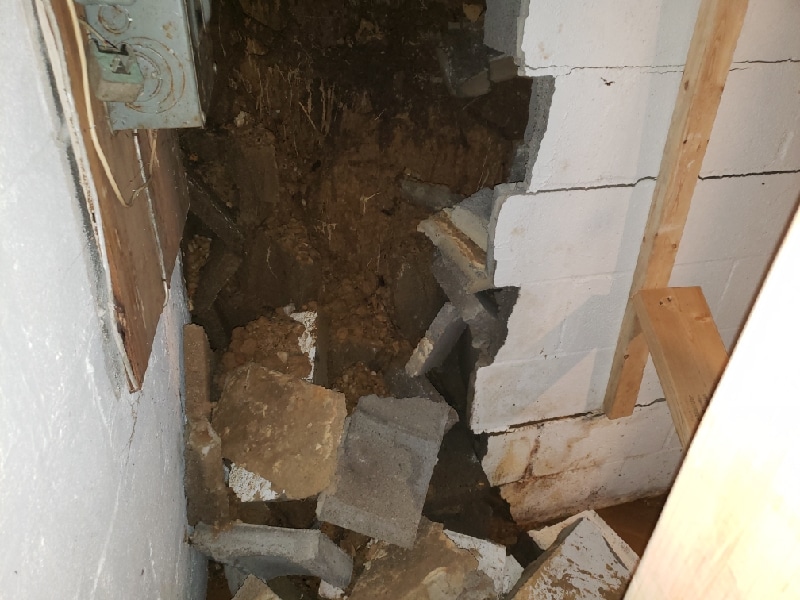
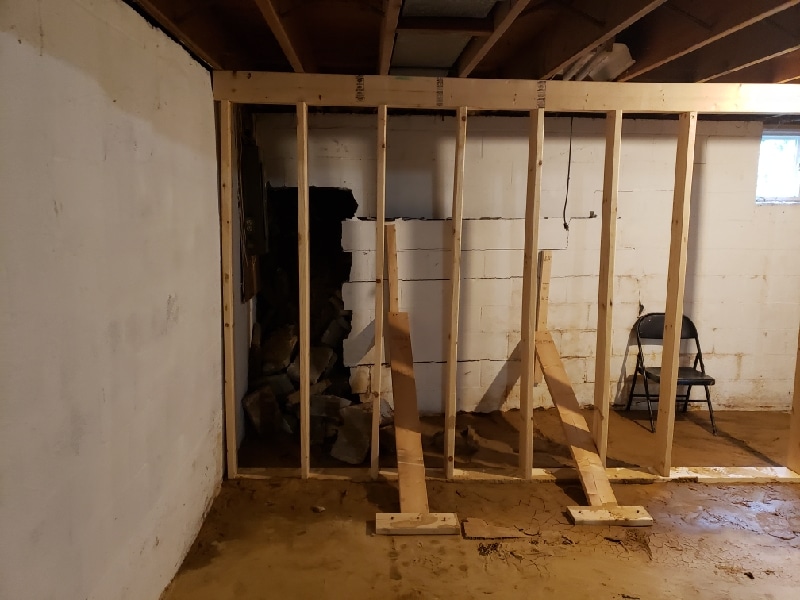
The project gallery and videos on this page show examples of the structural work our crews perform. We believe it is useful for you to see the type of work involved, the systems we install, and what these projects look like before deciding who you want working on your home.
Foundation Settlement Repair Across the DC Metro Area
Our team provides foundation settlement repair and related structural services throughout Northern Virginia, Washington, DC, and portions of Maryland.
In Virginia, we work with homeowners throughout Alexandria, Arlington, Fairfax County, Loudoun County, Prince William County, Manassas, Stafford, and surrounding communities. We also serve Washington, DC and numerous communities throughout Montgomery, Prince George’s, Howard, Charles, Calvert, and Anne Arundel counties in Maryland.
Local conditions can vary considerably throughout that service area. Homes in Alexandria and southeastern Fairfax County may encounter soil conditions that differ from properties farther west or north. Even two homes in the same neighborhood can have different fill, drainage, construction history, and subsurface conditions.
That is why our team evaluates each property individually. We want our recommendation to be based on your home, not a general assumption about homes in your ZIP code.
Visit our service-area page for the complete list of communities we serve.
Schedule a Foundation Settlement Inspection
If you are seeing developing cracks, uneven floors, sticking doors or windows, separation around a chimney or addition, or another sign that part of your home may be moving, our team can help you determine what is causing it.
We will evaluate the foundation, explain what we find, and recommend a repair that fits the structure and site conditions. If underpinning is needed, our engineers and foundation team will select the support system based on the requirements of your home rather than choosing a product from symptoms alone.
Our goal is to give you a clear understanding of the problem and a repair plan you can make an informed decision about.
Schedule an Inspection with DESKA or call 703-386-7741.