Northern Virginia Soil Problems: How They Affect Your Home’s Foundation
Foundation problems rarely begin with the structure itself. In most cases, the real cause lies beneath the home.
Across Northern Virginia, particularly in Alexandria, Arlington, Fairfax County, and surrounding communities, soil conditions play a major role in how foundations perform over time. Many homes in this region sit on dense clay soils that expand when wet and shrink when dry. These repeated cycles can slowly place stress on foundations, basement walls, crawl spaces, and concrete slabs.
Understanding Northern Virginia clay soil foundation issues can help homeowners identify early warning signs and protect their homes before structural problems become more severe.
The Soil Beneath Homes in Alexandria and Northern Virginia
Northern Virginia sits within a geological transition zone that includes portions of the Atlantic Coastal Plain and the Piedmont region. Because of this, the soil beneath homes in Alexandria and nearby communities is often a mixture of clay, silt, and weathered rock.
One of the most common contributors to foundation movement in the region is expansive clay soil. These soils contain minerals that absorb water easily and change volume depending on moisture levels.
In many parts of Fairfax County and Arlington County, clay soils formed from the Potomac Formation are common. These soils can swell significantly when saturated and shrink when dry. Over time, this expansion and contraction places stress on structures built above them.
Homes located closer to the Potomac River and within the Coastal Plain region may also sit on marine clay deposits. These soils can be particularly problematic because they tend to hold moisture and drain slowly.
For homeowners, this means the ground beneath the house is constantly responding to weather conditions.
Why Clay Soil Causes Foundation Movement
A foundation depends on stable soil to support the weight of the structure above it. When soil shifts or changes volume, the foundation must adjust.
Clay soils act almost like a sponge. During periods of heavy rain, they absorb water and expand. During dry weather, they lose moisture and contract.
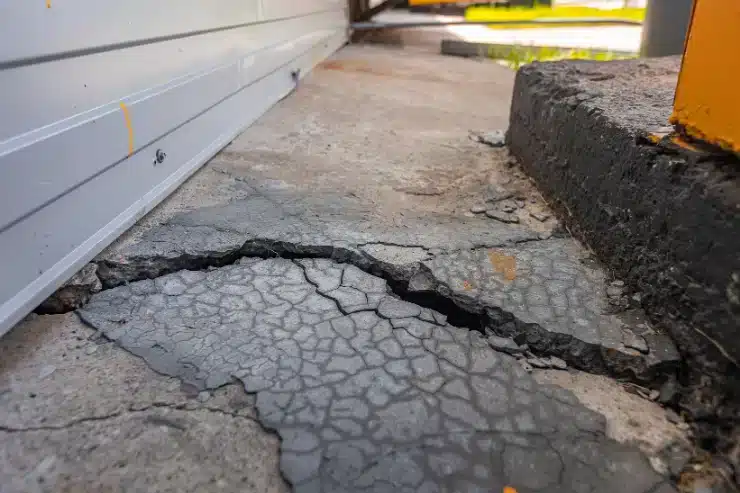
These changes can cause uneven pressure beneath and around the foundation. Over time, this movement can lead to structural problems such as foundation settlement, cracking basement walls, and uneven floors inside the home.
Common structural issues associated with Northern Virginia clay soils include:
Foundation settlement or sinking sections of the home
Cracks forming in basement walls or concrete slabs
Doors and windows that become difficult to open or close
Bowing or leaning foundation walls
Uneven or sloping interior floors
These issues often appear gradually, which makes it easy for homeowners to overlook the early signs.
Seasonal Weather Patterns in Northern Virginia
The climate in Northern Virginia contributes heavily to soil movement.
Spring and summer storms frequently bring heavy rainfall to the region. When the soil around a home becomes saturated, clay expands and pushes against foundation walls. This can increase lateral pressure around basements and crawl spaces.
Later in the summer, extended dry periods can cause soil to shrink as moisture evaporates. When this happens, voids can form beneath sections of the foundation, which may lead to settlement.
Winter conditions can also affect foundations. Freeze and thaw cycles cause soil to expand and contract as temperatures fluctuate. These cycles place additional stress on both the soil and the structure above it.
Because these seasonal changes occur every year, foundation movement can slowly accumulate over time.
Hydrostatic Pressure in Alexandria and Fairfax County Homes
Clay soil also contributes to hydrostatic pressure, which is a common cause of basement wall problems throughout Northern Virginia.
After periods of heavy rain, water builds up in the soil surrounding the foundation. Since clay soil drains slowly, water can remain trapped around the basement walls for extended periods.
This creates pressure that pushes inward against the foundation.
Over time, hydrostatic pressure may cause horizontal cracks, inward bowing walls, or water seepage through cracks and joints.
Homes in areas with poor drainage or low elevation often experience these problems more frequently.
Why Some Homes Experience More Foundation Problems
Not every home in Northern Virginia experiences the same level of foundation movement. Even houses on the same street may perform differently depending on several factors.
Drainage conditions around the home play a major role. If the ground slopes toward the house or downspouts release water too close to the foundation, the surrounding soil will absorb more moisture and expand. Tree roots can also affect soil conditions. Large trees draw water from the soil, which can cause localized drying and shrinkage beneath parts of the foundation. The age of the home can also influence how well it handles soil movement. Many homes built decades ago in Alexandria and Arlington were constructed before modern foundation stabilization systems were commonly used.
Because soil composition can vary significantly across Northern Virginia, even neighboring homes may experience very different levels of foundation movement.
Signs of Clay Soil Foundation Problems
Homeowners should pay attention to early warning signs that soil movement may be affecting their foundation.
Some of the most common indicators include:
- Stair step cracks in brick or masonry walls
- Cracks forming in basement walls or floors
- Doors and windows that suddenly begin sticking
- Uneven or sloping floors
- Gaps forming around door frames or window trim
While these problems may seem minor at first, they often indicate movement beneath the foundation.
Reducing the Impact of Soil Movement
Although homeowners cannot change the soil beneath their property, they can take steps to reduce moisture fluctuations around the foundation.
Proper drainage is one of the most effective ways to limit soil expansion. Gutters and downspouts should direct water several feet away from the home, and the ground around the foundation should slope away from the structure.
Maintaining consistent moisture levels in the soil can also help prevent extreme expansion and contraction cycles during prolonged dry periods.
However, if structural movement has already occurred, professional foundation repair may be necessary to stabilize the home.
Foundation Repair Solutions in Northern Virginia
At DESKA Foundation Repair, many of the structural issues we address in Alexandria, Arlington, and Fairfax County are directly related to soil movement.
Clay soils, drainage issues, and seasonal moisture changes can place significant stress on foundations throughout the region.
Depending on the situation, structural solutions may include foundation pier systems that stabilize settling homes, wall reinforcement systems that correct bowing basement walls, or crack repair systems that prevent water intrusion.
A professional inspection helps identify the cause of the movement and determine the most effective long term repair solution.
Protecting Your Home from Northern Virginia Soil Movement
Soil conditions across Northern Virginia play a major role in the long term stability of homes. Expansive clay soils combined with seasonal weather changes create ongoing movement beneath foundations throughout the region. Understanding how these soils behave can help homeowners recognize early warning signs and take action before structural damage becomes more severe.
If you notice cracks, settlement, or signs of foundation movement, a professional inspection can determine whether Northern Virginia clay soil foundation issues are affecting your home and what steps can restore stability.