Why Foundation Repairs Often Include Drainage Improvements
One of the questions we hear quite often during foundation inspections is, “If my foundation is being repaired, why are you also recommending drainage work?”
It’s a fair question. If your basement wall has cracked or your foundation has settled, it seems like fixing the foundation should solve the problem.
After inspecting homes throughout Northern Virginia, we’ve learned that foundation movement is rarely the beginning of the story. More often, it’s the result of conditions that have been affecting the home for years. That’s why our inspections don’t focus only on the damaged concrete. We spend just as much time evaluating the property around the home because understanding what caused the movement is the only way to recommend a lasting solution.
Foundation Problems Usually Start with Changing Soil Conditions
A foundation doesn’t simply decide to crack one day.
Almost every foundation repair we’ve performed started with changes happening beneath or around the home. In Northern Virginia, clay-heavy soils expand when they absorb water and shrink as they dry out. That constant cycle places stress on the foundation year after year, even if the homeowner doesn’t notice anything unusual.
Many people assume one heavy rainstorm or one unusually dry summer caused the problem. In reality, what we’re seeing is usually the result of years of seasonal changes. The crack or sticking door is simply the first visible sign that the foundation has reached a point where the movement can no longer stay hidden.
That's Why We Begin Every Inspection Outside
Homeowners are often surprised when we don’t head straight for the basement.
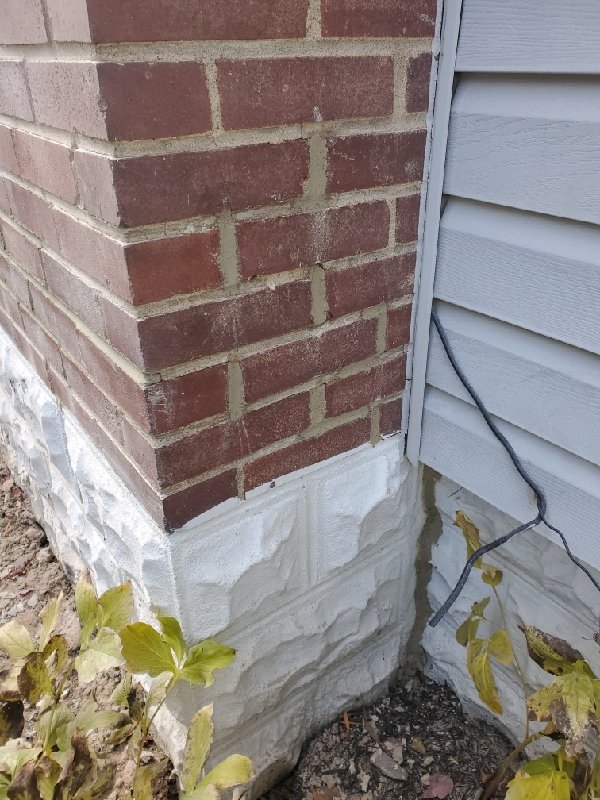
Instead, one of the first things we do is walk around the outside of the home. We’re looking at grading, gutters, downspouts, landscaping, and anywhere water may be collecting near the foundation. Those observations often tell us more about why the foundation moved than the crack itself ever could.
Over the years, we’ve inspected homes with nearly identical settlement cracks that required completely different recommendations. The difference wasn’t the crack—it was how water was behaving around the property. Understanding that difference is one of the most important parts of a foundation inspection.
Water Doesn't Damage Concrete Overnight
One thing we’ve learned after years of foundation repair is that water is usually working slowly.
Every time rainwater collects near the foundation, the surrounding soil changes a little. As clay soils absorb moisture, they expand and place additional pressure on foundation walls. During dry periods, those same soils shrink and can leave sections of the foundation with less support than they had before.
Most homeowners never notice those small changes because they happen below ground. After enough seasons, however, the effects begin showing up inside the home as cracks, uneven floors, or doors that suddenly don’t close the way they used to.
We've Seen Repairs Performing Perfectly While New Problems Develop Nearby
One of the experiences that shaped how we approach foundation repair involves homes that had already been repaired years earlier.
Sometimes we’ll inspect a property where the original repair is still doing exactly what it was designed to do. The piers are stable, the carbon fiber reinforcement is secure, and there are no signs that the repair itself has failed.
What we do find, however, is water collecting against another section of the foundation because the grading has changed, landscaping has been added, or downspouts no longer carry water far enough away from the home. The repair didn’t fail. The conditions around the home changed.
That’s an important distinction because it reminds us that protecting a foundation doesn’t stop once the structural repair is complete.
Drainage Helps Protect the Repair
This is why drainage improvements are so often part of our recommendations.
We’re not suggesting them because the foundation repair isn’t enough. We’re recommending them because we want to reduce the conditions that contributed to the problem in the first place.
Depending on the property, that may involve improving grading, extending downspouts, installing drainage systems, or redirecting surface water away from the home. Every property is different, but the goal is always the same: keep excess water from continually changing the soil around the foundation.
When foundation repairs and drainage improvements work together, homeowners are far less likely to experience future movement caused by the same conditions.
Every Property Behaves Differently
One thing experience has taught us is that no two homes respond to water in exactly the same way.
We’ve inspected neighboring houses that were built during the same year by the same builder, yet one developed significant settlement while the other remained remarkably stable. The difference often comes down to grading, drainage, and how water has been managed over the life of the property.
That’s why we avoid making assumptions. Every inspection starts with understanding how the property functions today instead of relying on what should have happened when the home was built.
The Goal Is to Solve the Problem, Not Just Repair the Damage
Foundation repairs are designed to stabilize your home, but the best long-term results come from addressing both the structural issue and the conditions that caused it.
We’ve found that homeowners appreciate understanding why we’re recommending drainage improvements just as much as they appreciate the repair itself. Once they see how closely water, soil, and foundations are connected, the recommendations make much more sense.
Our goal has never been to repair concrete and move on to the next project. It’s to leave homeowners with a foundation that’s better protected for years to come because we’ve addressed the entire problem, not just the visible symptoms.
Contact Us for Expert Foundation Repair in Alexandria
If you’ve noticed foundation cracks, settlement, bowing walls, or drainage issues around your home, DESKA Foundation Repair can help.
Our inspections are designed to identify not only what’s happening to your foundation, but why it’s happening. By understanding the relationship between drainage, soil conditions, and structural movement, we can recommend repairs that are built to last.
Contact us today to schedule a professional foundation inspection.