
How the Freeze-Thaw Cycle Causes Uneven Concrete Around Your Home
In Northern Virginia and the Mid-Atlantic region, freezing winter temperatures and wet weather are a fact of life. But did you know those seasonal changes can seriously affect the concrete surfaces around your home? From sidewalks and driveways to patios and garage floors, uneven or sunken concrete is often a direct result of the freeze-thaw cycle.
At DESKA, we specialize in diagnosing the root cause of concrete movement and offer long-lasting, non-invasive repair solutions. In this article, we’ll explain how the freeze-thaw cycle damages concrete, and how concrete leveling can restore safety, appearance, and performance.
What Is the Freeze-Thaw Cycle?
The freeze-thaw cycle is a natural process that occurs when temperatures fluctuate between above and below freezing. Moisture in the soil, or water that has seeped under concrete slabs, freezes when temperatures drop. As it freezes, it expands, putting pressure on the soil and any structure above it, like your concrete driveway or front walkway.
When temperatures warm again, the frozen water thaws, and the soil contracts. Repeated cycles of expansion and contraction cause soil erosion, air pockets, and shifting, all of which destabilize the concrete resting on top.
How Freeze-Thaw Cycles Damage Concrete Surfaces
Even if your concrete was installed properly, the surrounding conditions play a huge role in how it ages. Here’s how the freeze-thaw cycle leads to uneven concrete:
1. Soil Movement
When water beneath a slab freezes, it causes frost heave, lifting the concrete slightly. Over time, this movement shifts the slab out of place. Once it thaws, the slab may not return to its original position.
2. Voids and Gaps
Meltwater doesn’t always drain properly. Instead, it can wash away supporting soil beneath the concrete, creating voids that allow slabs to sink or tilt.
3. Surface Cracking
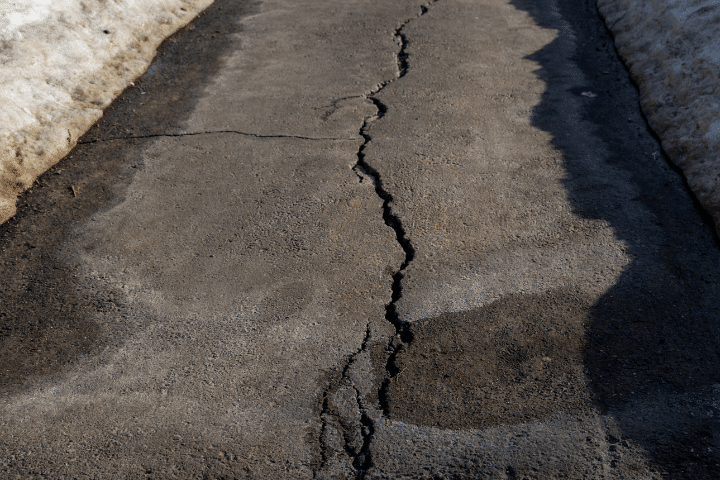
As the concrete slab flexes under pressure from below, it can develop surface or structural cracks. These cracks not only worsen over time, but they also allow even more water to seep underneath, accelerating the cycle.
4. Drainage Problems
Uneven concrete often leads to standing water near your home’s foundation or entryways, which can cause slippery surfaces, basement leaks, or mold problems in crawl spaces.
Common Signs of Freeze-Thaw Damage
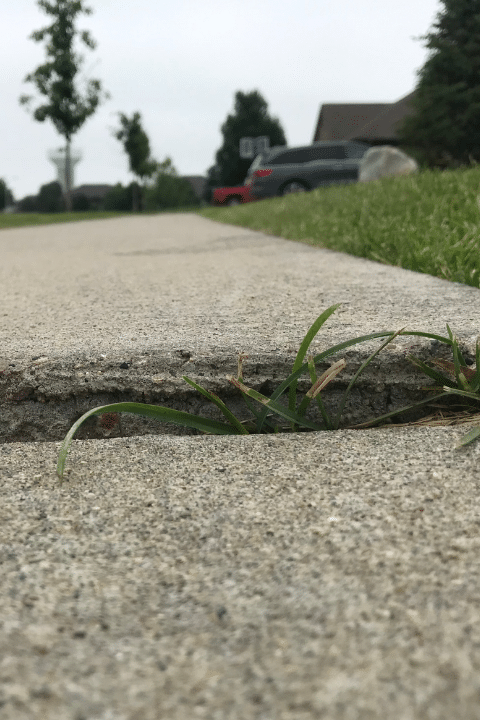
A sinking or sloped section of your sidewalk or driveway
Cracks forming in garage floors or concrete steps
Water pooling after snowmelt or rain
Trip hazards due to misaligned slabs
Gaps between concrete and adjacent surfaces like foundation walls
How Concrete Leveling Restores Your Property
The good news? You don’t have to rip out and replace damaged concrete. Concrete leveling, also known as slab lifting or polyurethane foam injection, is a cost-effective and minimally invasive repair method.
What Is Concrete Leveling?
Concrete leveling involves injecting a high-density polyurethane foam underneath the sunken slab. As the foam expands, it fills voids and gently lifts the concrete back into place. This process stabilizes the soil, prevents future settling, and eliminates tripping hazards, often in just a few hours.
Benefits of Concrete Leveling:
- Fast results with minimal downtime
- No demolition or reconstruction
- Long-lasting results with soil stabilization
- Weather-resistant foam that won’t wash out
- Improved safety and curb appeal
Why Act Now?
Late winter and early spring are ideal times to address concrete issues before they get worse. Fixing uneven slabs early can prevent water drainage problems in the spring and reduce the risk of accidents during icy conditions.
Protect Your Concrete with DESKA
If you’re seeing cracks, sloping slabs, or pooling water around your home, don’t wait for the damage to get worse. At DESKA, we provide expert inspections and professional concrete leveling services to protect your property and restore peace of mind.
Contact us today to schedule a free consultation and learn how we can help you combat the effects of winter weather and the freeze-thaw cycle.