What Causes Foundation Settlement in Northern Virginia Soils?
If you own a home in Alexandria, Arlington, Fairfax, or the surrounding Northern Virginia area, you have probably heard someone say “it’s the soil” when foundation problems come up. That is not just a saying. The type of soil under your home, and how it responds to moisture and weather, is one of the biggest factors behind foundation settlement.
At DESKA, we work with Northern Virginia soils every day. From dense, clay-rich soils to disturbed fill around newer construction, we see how local ground conditions can quietly shift and stress a foundation over time. In this article, we will walk through the main causes of foundation settlement in our area, what to watch for, and why having a local expert matters.
What Is Foundation Settlement?
Alexandria has a mix of older brick homes, townhomes, and newer construction, all built on soils that can expand, contract, and shift over time. A few key factors that contribute to cracking include:
- Expansive or moisture-sensitive soils that swell when wet and shrink when dry
- Poor drainage or water pooling near the foundation
- Tree roots and landscaping too close to the home
- Normal curing of concrete in newer homes
In Northern Virginia, several soil and moisture related factors combine to make this type of foundation settlement more common.
Northern Virginia’s Clay-Rich Soils
One of the biggest causes of foundation settlement in this region is our clay-heavy soils.
How Clay Soil Affects Foundations
Clay soils tend to:
- Absorb water and swell when they are wet
- Shrink and harden as they dry out
- Exert significant pressure on foundations as they expand and contract
When the soil swells, it can push against or under the foundation. When it dries and shrinks, it can pull away and leave voids or weak areas beneath footings. Over time, this constant cycle of expansion and contraction leads to differential settlement and cracking.
Many homes in and around Alexandria and Arlington are built directly on or backfilled with clay-rich soils, so controlling moisture and drainage is critical.
Rain, Drought, and Seasonal Moisture Changes
Northern Virginia weather often swings between heavy rain and dry stretches, especially from season to season. The soil under your home responds to every one of those changes.
During Wet Periods
After intense or prolonged rain:
- Clay soils swell and become soft
- Poorly compacted backfill can loosen and shift
- Water may collect around the foundation and footings
During Dry Periods
When conditions turn dry:
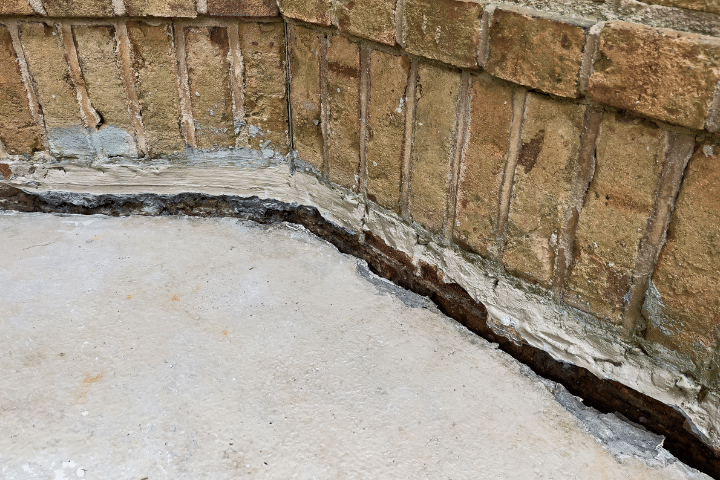
- Soil contracts and can pull away from the foundation
- Support under parts of the footing can be reduced
- Voids may develop beneath footings or slabs
The more these cycles repeat, the more likely you are to see:
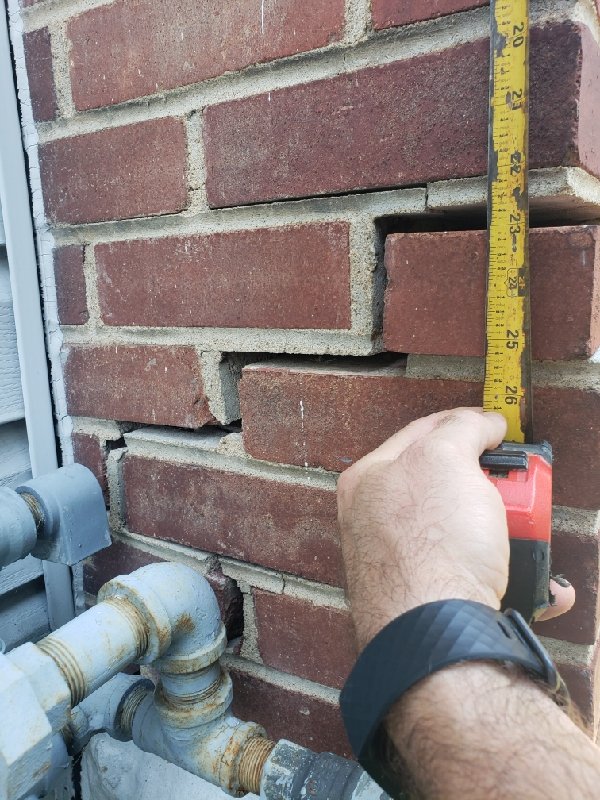
- Stair-step cracks in brick or block
- Vertical or diagonal cracks in foundation walls
- Floors that begin to feel uneven or out of level
Even without extreme freeze-thaw cycles, this repeated wet-dry movement is enough to stress your foundation.
Poor Drainage Around the Home
Even in more stable soils, poor surface and roof drainage can turn minor settlement into a serious structural concern.
Common drainage problems we see around Northern Virginia homes include:
- Short or missing downspout extensions that release water right beside the foundation
- Clogged or undersized gutters that overflow and dump water near the house
- Negative grading, where the ground slopes toward the home instead of away
- Patios, walkways, or driveways that channel water toward the foundation
When water is allowed to collect near the house:
- The soil next to the foundation becomes oversaturated and loses strength
- Hydrostatic pressure builds up along basement or crawl space walls
- More water finds its way into small cracks, slowly widening them
Over time, that combination of soft soil and increased water pressure can lead to settlement, wall cracks, and moisture problems inside.
Erosion and Washout Beneath the Foundation
Another major factor in foundation settlement causes is erosion. When water is not properly managed, it can slowly transport soil away from under the home.
Erosion can result from:
- Downspouts that discharge too close to the foundation
- Underground drain lines that leak or terminate near the structure
- Plumbing or sewer leaks beneath or next to the house
- Uncontrolled runoff on sloped lots
As erosion progresses:
- Soil is removed from under small sections of footing or slab
- Those areas lose support and begin to sink or rotate
- Cracks, separation, and misalignment appear as the house tries to adjust
Often, homeowners first notice this as settling porches, separating steps, or gaps where attached garages meet the main house.
Fill Soils and Compaction Problems
In newer neighborhoods around Northern Virginia, it is common for builders to place fill soils to reshape lots and create building pads. If that fill is not properly compacted or contains poor-quality material, it can compress slowly under the weight of the home.
Signs of settlement from fill or compaction issues may include:
- Cracks where an addition meets the original house
- Separation at transitions between different parts of the structure
- Settlement concentrated in one corner or one side of the home
While this situation is not unique to our region, it is a frequent contributor to foundation settlement in growing areas outside the urban core.
How to Tell If Soil Movement Is Affecting Your Foundation
You cannot see the soil under your home, but your house will often show you that something is changing below. Watch for:
Stair-step cracks in exterior brick or block
Diagonal cracks above doors and windows inside
Doors or windows that stick, rub, or no longer latch properly
Uneven or sloping floors, especially near interior walls
Gaps between walls and ceilings or baseboards
A chimney that appears to lean or pull away from the house
If you are noticing more than one of these warning signs, there is a good chance your foundation is reacting to shifting soils.
Why Local Experience Matters
Foundation problems are not one-size-fits-all, and neither are the soils under our homes.
DESKA brings local experience with:
- Clay-heavy and moisture-sensitive Northern Virginia soils
- Seasonal patterns of rain, humidity, and drying
- Common grading and drainage issues in Alexandria-area lots
- Settlement patterns in both older neighborhoods and newer developments
That knowledge helps us:
- Identify what is truly causing your settlement
- Design repair solutions that work with your specific soil conditions
- Focus on long-term stability rather than short-term patch work
How DESKA Stabilizes Settling Foundations
Once we diagnose the cause and extent of settlement, we can recommend durable, targeted repairs, which may include:
- Helical or push piers to transfer the weight of your home to deeper, more stable soils
- Wall reinforcement for cracked or bowing foundation walls
- Basement or crawl space waterproofing to manage water and reduce soil pressure
- Drainage and grading improvements to move water away from the foundation
These systems are designed to bypass unstable surface soils, stabilize your structure, and help prevent further movement.
Worried About What Northern Virginia Soils Are Doing to Your Home?
If you are seeing cracks, sticking doors, sloping floors, or other warning signs, your foundation may already be reacting to the soil conditions beneath it.
Contact DESKA for a professional foundation evaluation.
We will inspect your home, explain how local soil and drainage conditions may be affecting it, and recommend a repair plan tailored to your property and Northern Virginia’s unique soil challenges.
Protect your home from foundation settlement today so it stays safe, stable, and comfortable for years to come.